In construction, success does not begin with design or execution alone — it begins with understanding the nature of the soil on which the project will stand. This is where geotechnical soil studies prove essential as the first step in ensuring the safety and stability of any structure.
What Are Geotechnical Soil Studies?
Geotechnical investigations are a set of field and laboratory tests conducted to determine the properties of soil and rock at a project site, with the goal of assessing their load-bearing capacity and identifying the appropriate foundation type.
These studies typically include:
- Soil borings
- Standard Penetration Test (SPT)
- Soil property analysis
- Groundwater level determination
- Bearing capacity evaluation
- Certified geotechnical report
Why Are Soil Studies Necessary Before Construction?
Neglecting soil investigation can lead to serious structural problems and expensive remediation. Key reasons include:
- Foundation type selection: Isolated footings, raft foundations, or piles — the right choice depends on soil data.
- Risk reduction: Identify differential settlement, weak layers, or voids before they become costly failures.
- Long-term cost savings: A pre-construction soil study is far less expensive than post-construction foundation repairs.
- Regulatory compliance: Most Saudi authorities require a certified soil report before issuing construction permits.
Phases of a Geotechnical Investigation
- Site reconnaissance — assess terrain, project area, and proposed borehole locations.
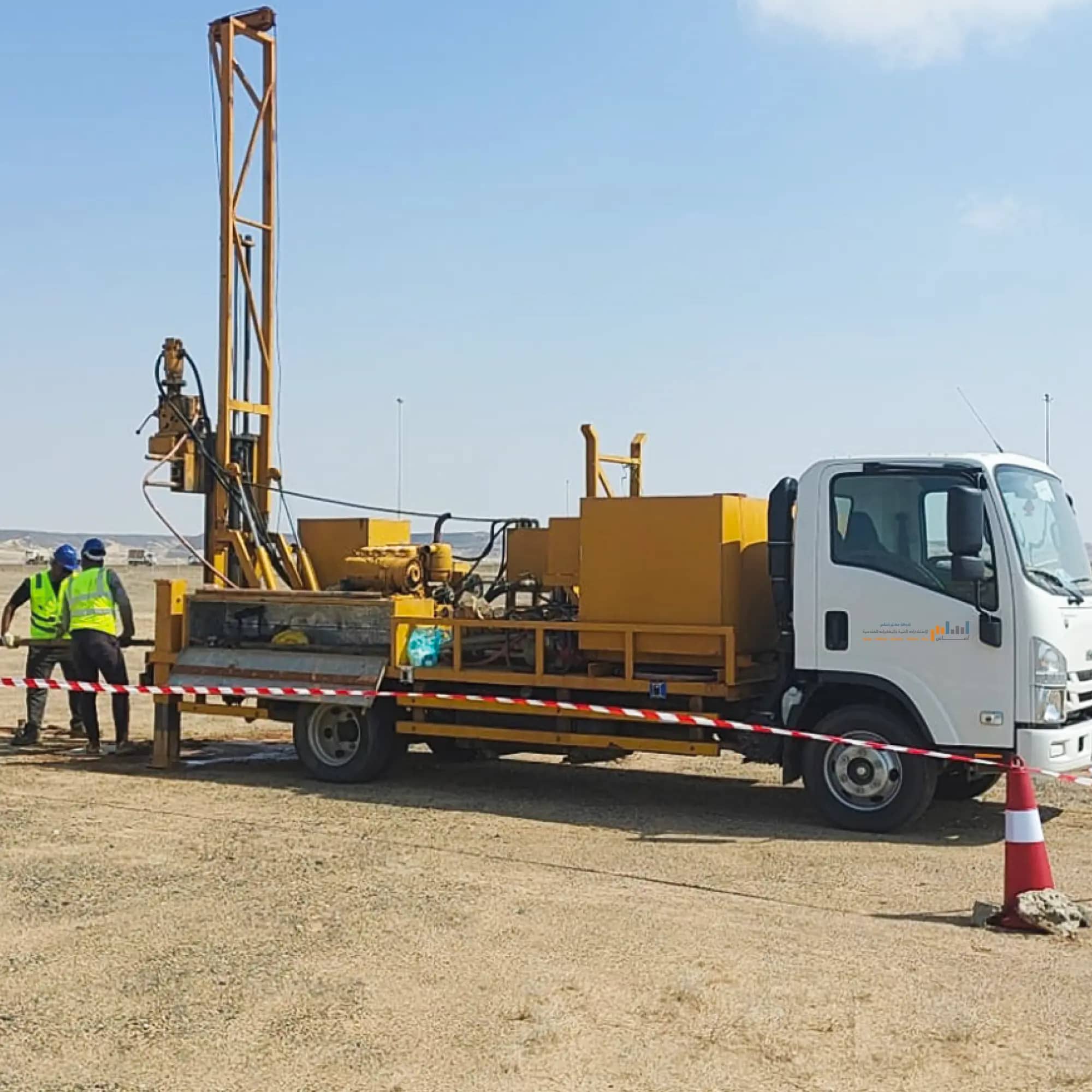
- Soil borings — drill to required depths, collect samples, run SPT, record stratigraphy, measure groundwater.
- Laboratory testing — density, moisture, plasticity, shear strength, bearing capacity.
- Geotechnical report — layer descriptions, test results, foundation recommendations.
Why Choose ASAS Laboratory?
ASAS Laboratory delivers accurate, certified geotechnical investigations across Saudi Arabia with modern drilling rigs, calibrated equipment, and experienced geotechnical engineers. Fast turnaround. Reports accepted by all major Saudi authorities.
Frequently Asked Questions
What are the consequences of non-compliance with Saudi Building Code SBC 303 for soil testing?
Saudi Building Code SBC 303 (Soils & Foundations) requires developers and contractors to carry out certified geotechnical investigations before construction. Non-compliance can result in: rejection of building permits by the municipality, denial of latent-defect insurance coverage if settlement or cracking occurs, and full legal liability for the contractor toward the property owner in the event of structural failure.
What are "ghost reports" and how do they harm your project?
Ghost (fictitious) soil reports are reports prepared without conducting real field tests — submitted only to satisfy licensing requirements. They are dangerous because:
- They do not reflect actual soil conditions at the site
- They are rejected by latent-defect insurers (e.g., Malath Insurance)
- They expose the contractor and the engineering office to legal liability
- They are not accepted by government supervisory bodies during audits
ASAS Laboratory conducts all tests — field and lab — on-site with calibrated equipment. Every report is backed by site photographs and verifiable instrument data.