
Soil testing before construction isn't a box-checking formality — ground that looks solid on the surface can hide fill layers, weak clay pockets, or a high water table underneath, all of which directly threaten a building's stability if they go undetected. This article focuses on the question most guides skip: what actually happens when a project ignores this step?
For a deep dive into the tests themselves (SPT, CBR, Atterberg Limits), see our Soil Testing for Construction guide. Here we focus on the part most often overlooked: the real risks of skipping this step, and exactly when it's required.
What Is Soil Testing Before Construction?
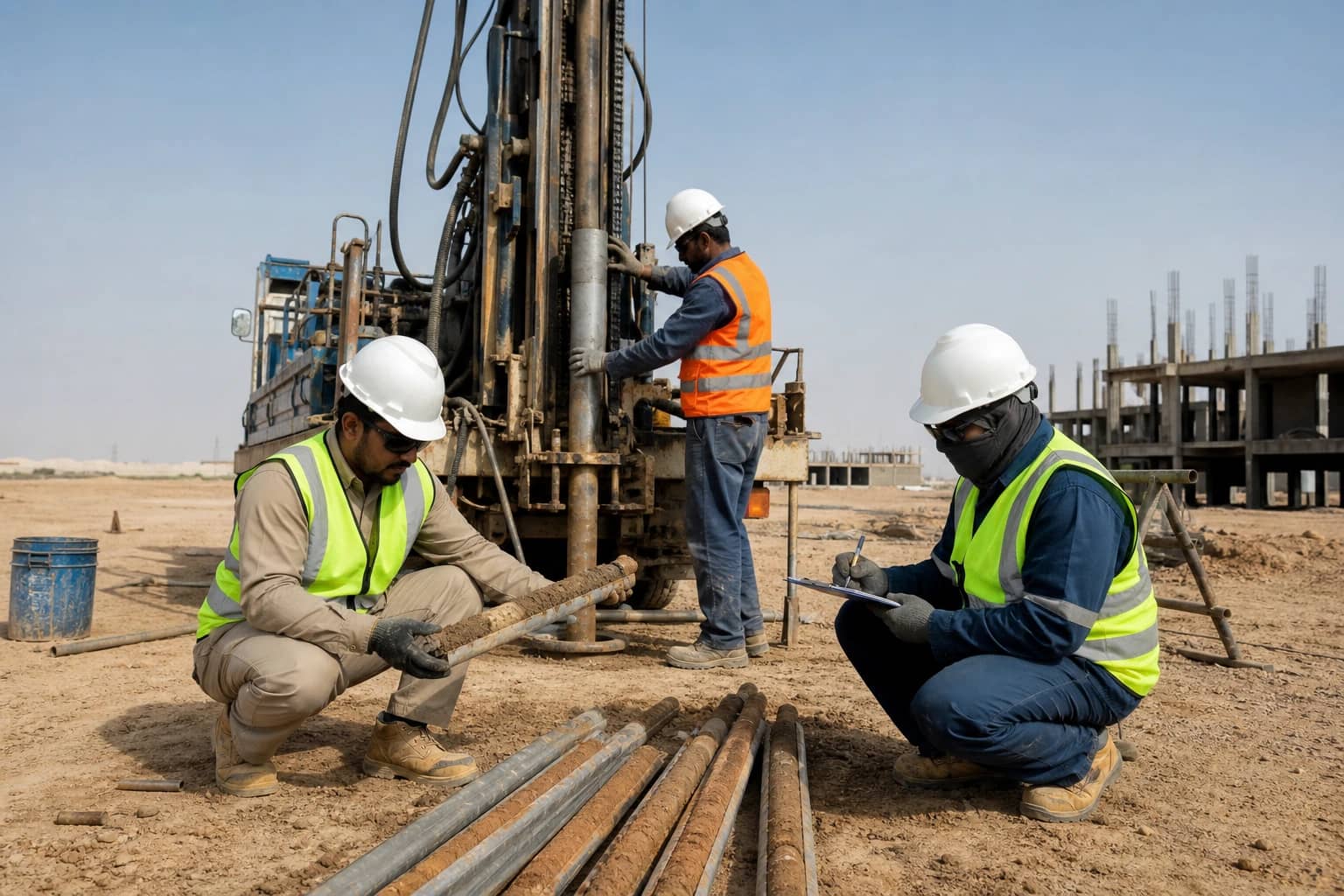
Soil testing is a set of field and laboratory investigations carried out at the project site to determine the physical and mechanical properties of the soil and its capacity to bear the expected loads. The process includes drilling boreholes, extracting samples from different soil layers, running field and lab tests, and producing an engineering report with recommendations on the appropriate foundation type, founding depth, bearing capacity, and groundwater level.
The Real Risks of Skipping Soil Testing
Building without a soil study can lead to problems that are difficult and costly to fix afterward:
- Uneven foundation settlement
- Cracks appearing in walls and ceilings
- Increased risk of water infiltration into the structure
- Needing to underpin foundations after construction
- Higher maintenance and repair costs
- Project delays from unexpected issues discovered mid-construction
In some cases, the foundation design has to be redone entirely — a major increase in both cost and timeline — while the cost of the soil study itself is a small fraction of the total project budget.
Why Soil Testing Is a Necessity, Not an Option
Key benefits of soil testing:
- Accurately determining soil bearing capacity
- Choosing the most suitable foundation type
- Detecting weak soil layers before construction starts
- Identifying the groundwater level and its effect on foundations
- Reducing the risk of differential settlement
- Avoiding costly changes mid-construction
- Extending the structure's service life
What Does a Soil Testing Report Include?
Once testing is complete, an accredited soil testing lab issues a full technical report covering:
- Geological description and soil stratigraphy
- Borehole and field test results
- Laboratory test results
- Groundwater level
- Soil bearing capacity
- Recommended foundation type and founding depth
- Recommendations for excavation and backfill work
This report is the primary reference for foundation design, which is why it must be issued by an accredited, specialized engineering laboratory.
When Should Soil Testing Be Done?
The best time for soil testing is before excavation or foundation work begins, so the design engineer can make the right decisions from day one. A new study is also recommended when expanding an existing building, changing its use, or at sites where soil conditions are suspected to have changed.
Why Choose an Accredited Laboratory?
The quality of soil testing results depends on the engineering team's experience, equipment accuracy, and adherence to technical specifications during drilling and testing. Working with an accredited soil testing lab ensures accurate data and reliable reports that support safer, more durable structures while reducing future risks and costs.