Why Soil Investigation Is Critical in Jeddah
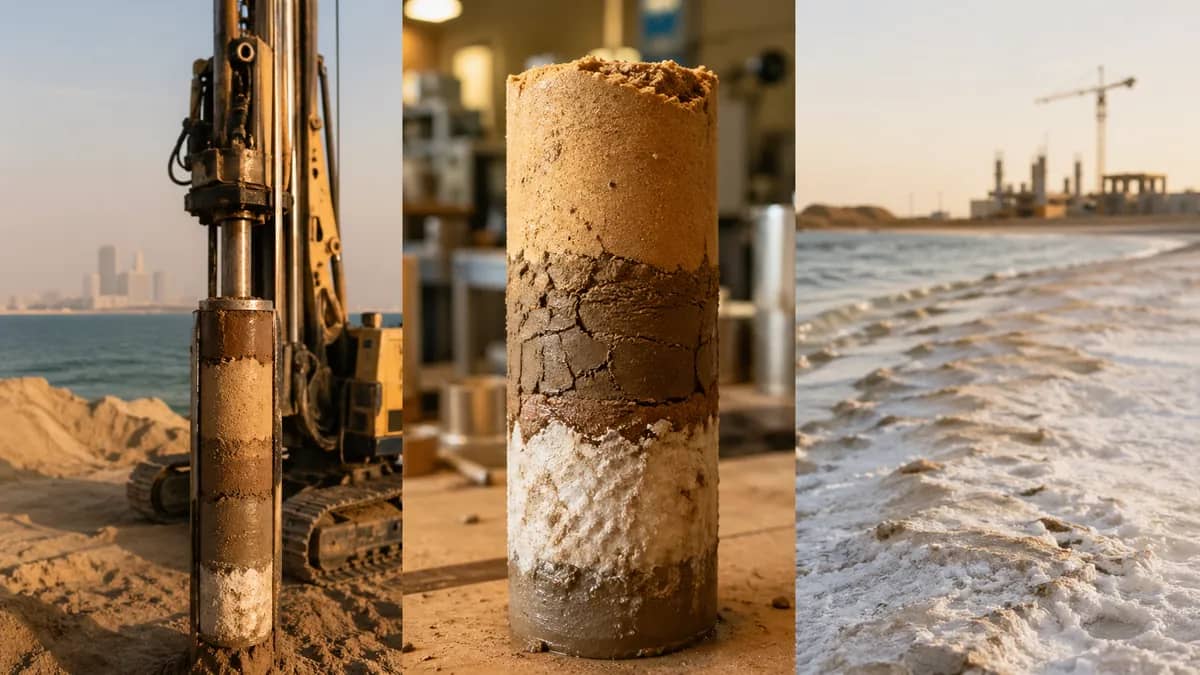
Soil investigation is a fundamental step before starting any construction project, especially in a coastal city like Jeddah with diverse geological conditions. Understanding soil properties directly influences foundation selection and helps prevent costly future issues.
Common Soil Types in Jeddah
Sandy Soil
- ✔️ Good drainage
- ✔️ Easy excavation
- ❗ Weak if loose
Clay Soil
- ✔️ Retains water
- ❗ Expands and shrinks
- ❗ Affects stability
Sabkha Soil
- ❗ High salt content
- ❗ Causes corrosion
- ❗ Reduces bearing capacity over time
Key Geotechnical Challenges
Differential Settlement
Occurs due to varying soil properties, leading to cracks and structural tilting.
High Groundwater Table
Common near coastal areas, making excavation difficult and increasing costs.
Chemical Corrosion
Caused by salts in soil or water, damaging concrete and reinforcement.
Impact on Foundation Selection
Shallow Foundations
Used when soil is stable and strong:
- Isolated footings
- Strip footings
- Raft foundation
Deep Foundations
Used in weak soil or high groundwater conditions:
- Piles
- Caissons
Essential Soil Tests
- ✔️ Soil boring to determine layers and groundwater
- ✔️ SPT for strength and density
- ✔️ Chemical analysis for salinity and corrosion
Risks of Ignoring Soil Testing
- ❗ Structural settlement
- ❗ Cracks in walls
- ❗ Water leakage
- ❗ High maintenance costs
- ❗ Partial or total failure
Jeddah Districts — Geotechnical Overview
| District | Dominant Soil | Main Challenge |
|---|---|---|
| Corniche / South Jeddah | Coastal sand + sabkha | Salts + shallow groundwater |
| Central Jeddah | Medium-dense sand | Variable bearing capacity |
| East Jeddah (new expansions) | Sandy gravel + rock | Difficult excavation |
| North Jeddah (new projects) | Loose sand or fill | Potential settlement in fill |
Role of an Accredited Soil Lab in Jeddah
A certified engineering laboratory ensures project safety by:
- ✔️ Conducting field borings and detailed soil layer analysis
- ✔️ SPT testing per ASTM D1586
- ✔️ Chemical analysis for sulfates and chlorides
- ✔️ Determining groundwater levels and waterproofing recommendations
- ✔️ Issuing certified reports accepted by municipalities and Baladi platform
Asas Laboratory in Jeddah — Accredited Local Expertise
Asas Laboratory Company operates in Jeddah through its branch in Al-Furusiya, with a specialized field team covering all city districts.
Our services in Jeddah include:
- ✔️ Soil borings for all project types (villas, buildings, complexes, roads)
- ✔️ Complete soil testing per SBC 303
- ✔️ Chemical analysis for coastal and saline soils
- ✔️ Certified reports accepted by Baladi platform and government authorities
Conclusion
Jeddah’s soil conditions vary significantly by district — coastal sandy-saline soils, groundwater challenges, and variable bearing capacities all demand professional investigation. Asas Laboratory’s accredited branch in Jeddah provides the testing, analysis, and engineering reports you need for safe, stable, and code-compliant construction.