
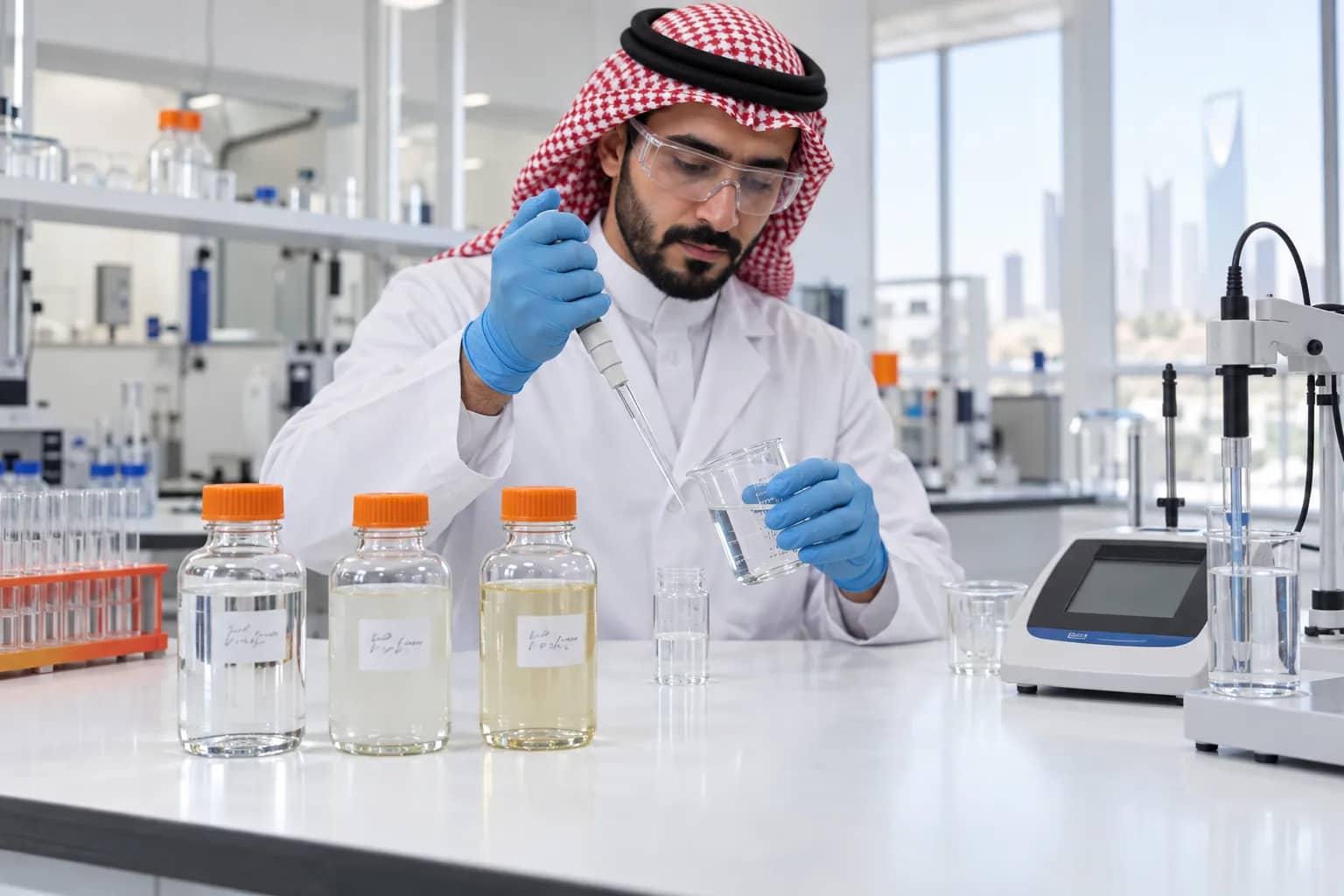
Water looks the same in a glass, but its chemistry differs sharply between a city supply, a farm well in Qassim, a hotel tank in Jeddah, and groundwater sitting two meters below a building's foundations in Dammam. Chemical water analysis is the only way to know what salts and minerals the water actually carries — and whether it suits its intended use: drinking, irrigation, industry, or mixing concrete.
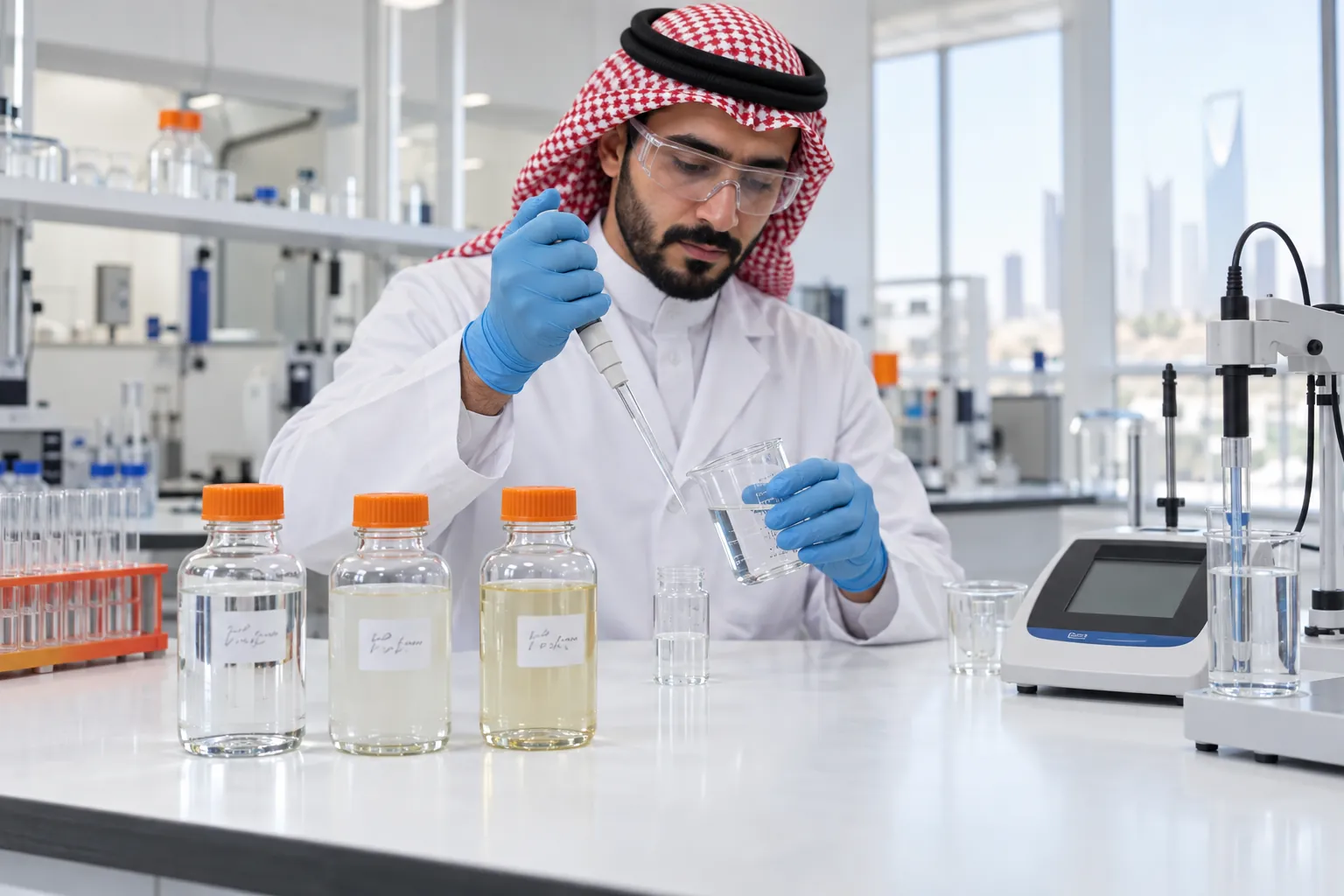
This guide covers the chemical parameters a lab measures, what each value means, the reference limits used for each type of water, and how to take a proper sample so the analysis isn't compromised before it reaches the lab.
Key Chemical Parameters in Water Analysis
There's no single "water test" that fits every case; the lab selects parameters based on how the water will be used. These are the main ones and what each reveals:
| Parameter | Standard | What it reveals |
|---|---|---|
| pH | — | Acidity or alkalinity; acidic water speeds up pipe and steel corrosion |
| Turbidity | ASTM D1889 | Suspended particles; an indicator of clarity and filtration performance |
| Total hardness | ASTM D1126 | Calcium and magnesium salts; the cause of scale in heaters and plumbing |
| Calcium & magnesium | ASTM D511 | The individual hardness components; important for irrigation water |
| Sulfates (SO₄) | ASTM D516 | Aggressiveness toward concrete, and bitter taste in drinking water |
| Chlorides (Cl) | ASTM D512 | Salinity, and the risk of reinforcement corrosion |
| Total dissolved solids (TDS) | — | Everything dissolved in the water — the broadest salinity indicator |
Drinking Water Analysis: Homes, Hotels and Storage Tanks
Municipal water arrives treated, but ground and roof tanks and home desalination units can change its properties. Drinking water analysis is usually requested when a new building is commissioned, after tanks are cleaned, when taste or color changes, or as part of operating requirements for hotels and restaurants.
- Turbidity: the WHO recommends staying below 1 NTU for effective disinfection; it usually becomes visible above 5 NTU.
- TDS: per WHO, water below 600 mg/L is generally palatable, becoming increasingly unpalatable above 1000 mg/L.
- Hardness: water up to 60 mg/L (as calcium carbonate) is soft, 61–120 moderately hard, 121–180 hard, and above 180 very hard. High hardness is an operational problem more than a health one: scale in heaters and boilers and clogged shower heads.
Important: chemical analysis measures salts and minerals — it does not detect bacterial contamination. A full verdict on drinking water safety needs a separate microbiological test alongside the chemical analysis.
Well Water and Groundwater Analysis
Well water is the most variable in the Kingdom; two wells on the same farm can differ in salinity depending on depth and aquifer. That's why a neighbor's result can't be relied on. Test a well when it's first drilled, then periodically — at least once a year — or whenever taste changes or scaling appears.
Groundwater also has a structural side. In coastal areas and sabkha land, the water table sits close to foundations and is loaded with sulfates and chlorides. Water recovered from soil investigation boreholes is therefore analyzed chemically to establish site aggressiveness before the cement type and waterproofing are chosen.
ACI 318 (the basis of Saudi Building Code SBC 304) classifies concrete exposure to water-soluble sulfate in water as follows:
- Below 150 ppm: not applicable (S0).
- 150 to 1,500 ppm: moderate (S1).
- 1,500 to 10,000 ppm: severe (S2) — requires sulfate-resisting cement.
- Above 10,000 ppm: very severe (S3).
Irrigation Water Analysis
Irrigating with saline water doesn't kill a crop overnight; it builds salt up in the root zone season after season until soil fertility declines. Analyzing irrigation water before adopting a well — or before switching crops — prevents losses that are hard to reverse later.
The standard reference is the FAO guide to water quality for agriculture, which classifies TDS as:
- Below 450 mg/L: no restriction on use.
- 450 to 2,000 mg/L: slight to moderate restriction — needs irrigation management, leaching and tolerant crops.
- Above 2,000 mg/L: severe restriction — only for highly tolerant crops under careful management.
Calcium and magnesium are measured because their ratio to sodium determines whether the water preserves soil structure or gradually breaks it down.
Concrete Mixing Water: The Water Contractors Overlook
Water is a core part of the mix, and any salts it carries stay inside the concrete for its whole life. ASTM C1602 accepts potable water for mixing without testing, but well water or tanker water of unknown origin must be analyzed first. The standard's optional limits:
- Chlorides: up to 500 ppm for prestressed concrete, and up to 1,000 ppm for reinforced concrete exposed to moisture.
- Sulfates: up to 3,000 ppm.
- Total solids: up to 50,000 ppm.
Non-compliant water reduces strength and accelerates rebar corrosion — defects that only surface years later. That's why mixing water analysis is usually tied to a project's concrete testing program: a weak cube result may be caused by the water, not the cement.
Wastewater and Industrial Water
Wastewater is analyzed to monitor treatment plant performance and to confirm whether treated effluent can be reused for irrigation or cooling. Turbidity, TDS and sulfates are among the key parameters here, with required limits set by the end use and the project's own specifications.
How to Take a Proper Water Sample
Most misleading results come from the sample, not the lab. Follow these steps:
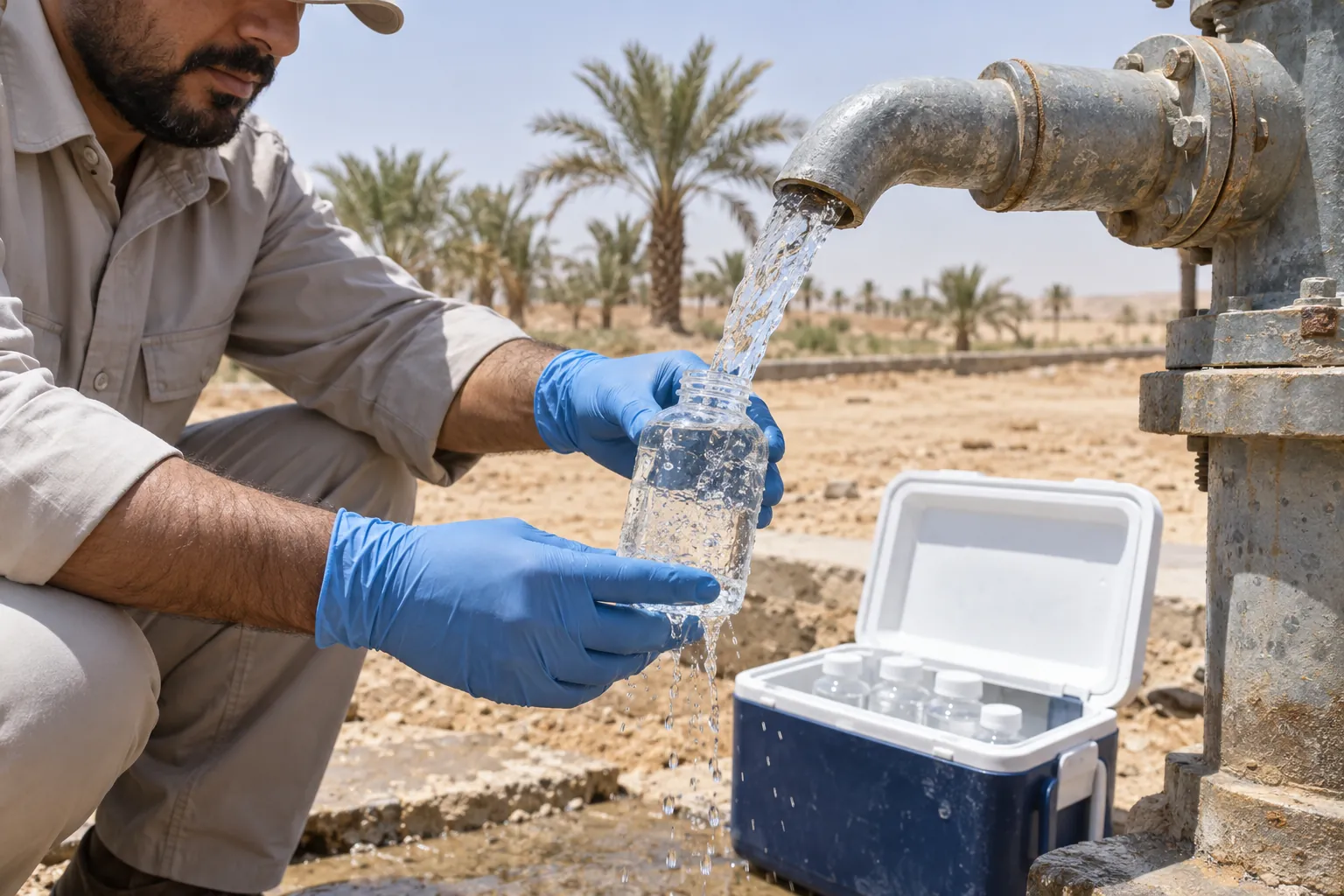
- Use a clean bottle that has never held chemicals or juice, and rinse it twice with the same water before filling.
- Let the tap or well pump run for a few minutes first, so you don't sample stagnant water from the pipes.
- Fill the bottle to the brim and seal it tightly with no air bubbles.
- Label it with the source, location, date and time.
- Keep it cool and out of the sun, and deliver it to the lab as soon as possible — ideally within 24 hours.
How to Read a Water Analysis Report
For each parameter the report shows the measured value, the unit (mg/L, NTU or ppm), and the test standard used. A value alone means little; what matters is comparing it with the reference limit for the intended use. Water with 1,500 mg/L TDS is rejected for drinking, may still suit tolerant crops, and may be accepted for concrete mixing if chlorides and sulfates are within limits. So always tell the lab what the water will be used for when you hand in the sample.
Asas Lab carries out chemical analysis of drinking, well, irrigation, waste and mixing water, with clear reports that compare results against the reference limits for the intended use. pH and TDS results are issued within one to two working days, and full chloride and sulfate analysis within about 3 working days depending on sample count.