
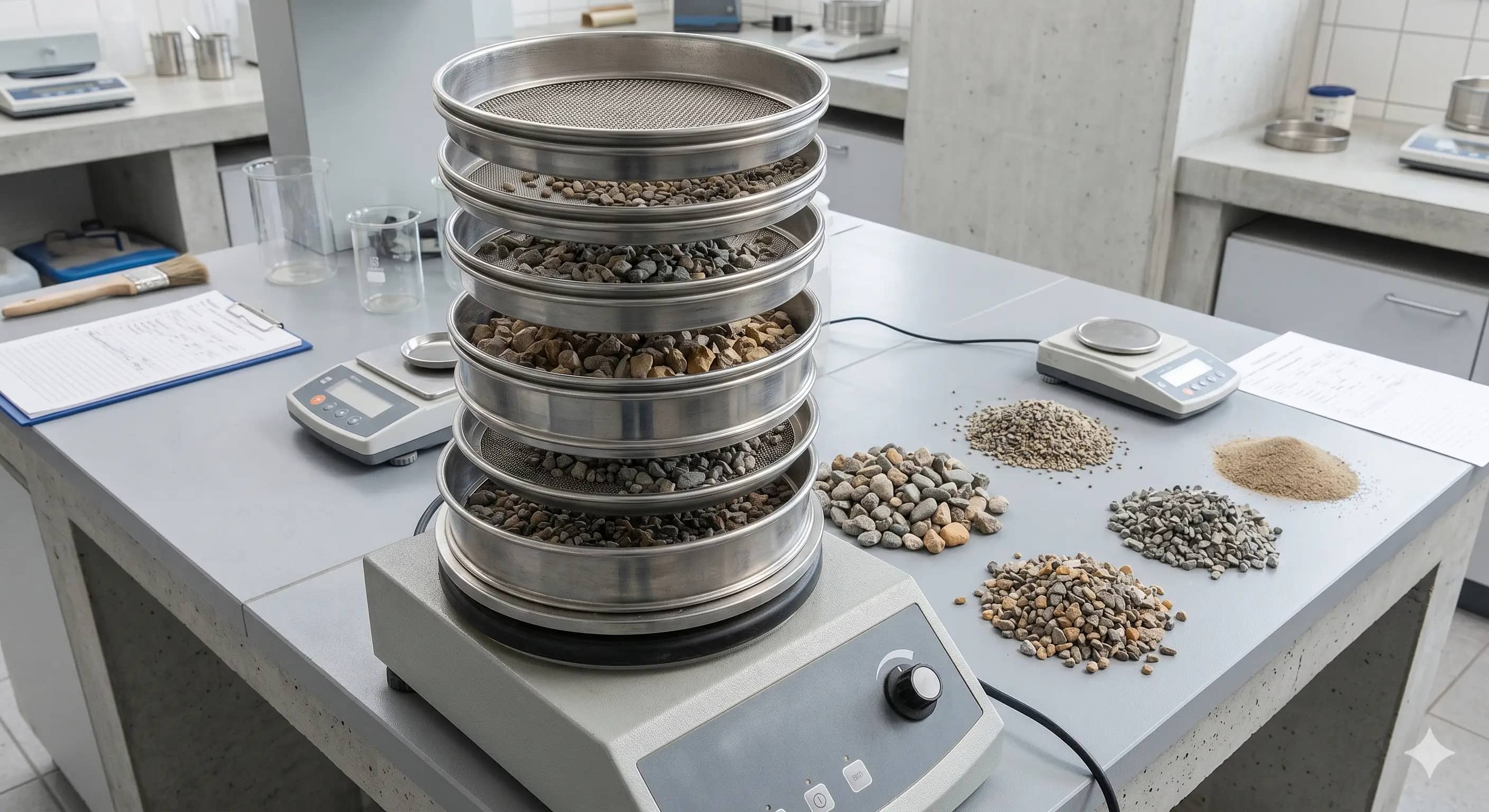
Aggregate Testing in Riyadh
Laboratory aggregate testing including gradation, abrasion resistance, specific gravity, and soundness — per ASTM C131 and C136 to verify aggregate compliance for concrete and asphalt mixes.
Aggregate testing is a set of laboratory tests verifying the quality of gravel and sand used in concrete and asphalt through gradation, abrasion resistance, and specific gravity. Performed by an accredited lab per ASTM and SASO specifications, it ensures aggregate compliance for concrete and asphalt mixes before use in any construction or road project.
What Is Aggregate Testing and Why Is It the Foundation of Concrete and Asphalt Quality?
Aggregate testing is a set of laboratory checks performed on gravel and sand before use in concrete or asphalt mixes. It includes gradation to determine particle size distribution, Los Angeles abrasion resistance, and specific gravity and absorption — all values that feed directly into structural mix design calculations.
Aggregate makes up roughly 70% of concrete's volume, and any deviation in its gradation or quality directly affects the compressive strength and durability of concrete or asphalt layers. Upfront aggregate testing catches the problem before mixing, saving on costly rework later.
As a laboratory accredited to ISO/IEC 17025:2017 (SAAC accreditation No. N-T-00645) and approved by MODON, Asas Lab performs comprehensive aggregate testing for quarry suppliers and contractors in Makkah, Jeddah, Madinah, Riyadh, and Qassim, issuing certified compliance reports for each aggregate batch.
Ensuring concrete and asphalt mix quality
SASO and ASTM standards compliance
Early detection of aggregate defects
Savings on rework costs
Full List of Certified Tests
8 certified tests per international standards
Standard aggregate sampling
أخذ عينة من الركام
Collecting a representative aggregate sample from the crusher or site using the standard method — the first step for accurate laboratory aggregate test results.
Unit: sample
Sieve Analysis
التدرج الحبيبي
Determines aggregate particle size distribution to classify it against the required gradation curve — the basis for concrete and asphalt mix design.
Unit: sample
Los Angeles Abrasion
مقاومة التآكل — لوس أنجلوس
Measures aggregate resistance to abrasion and wear under mechanical friction — a core quality criterion for aggregate used in concrete and road layers.
Unit: sample
Solar Reflectance Index (SRI)
مؤشر الانعكاس الشمسي (SRI)
Measures the aggregate surface's solar reflectance — required in cool-roof and pavement projects to reduce the urban heat island effect.
Unit: sample
Clay Lumps & Friable Particles
نسبة المواد المفتتة (كتل طينية)
Measures the percentage of clay lumps and friable particles in aggregate — high proportions weaken bonding with cement and reduce concrete strength.
Unit: sample
Magnesium Sulfate Soundness
مقاومة كبريتات المغنسيوم
Evaluates aggregate resistance to weathering via wetting-drying cycles in magnesium sulfate solution — important for road projects exposed to climatic fluctuations.
Unit: sample
Petrographic Classification
المكونات المعدنية (Petrographic)
Microscopic analysis to identify aggregate mineral composition and parent rock type — reveals components that may chemically react with cement (alkali-silica reaction).
Unit: sample
Specific Gravity & Absorption
الوزن النوعي ودرجة الامتصاص
Measures aggregate specific gravity and water absorption — essential values for calculating precise mix proportions in concrete mix design.
Unit: sample
Aggregate Testing in Riyadh — Limestone and Gypsum Contamination Control
Riyadh's aggregate mostly comes from limestone quarries near Dawadmi and Majmaah. The critical risk is gypsum contamination from quarries near geological gypsum layers — gypsum in aggregate disrupts cement hydration and weakens asphalt binder bonds. ASAS Lab analyzes sulfate content by chemical methods, performs LA abrasion, sieve analysis, density and absorption testing, and issues SASO GSO 1992 compliance certificates with a technical opinion on fitness for use. Results in 5 working days.
Adopted Engineering Standards
All aggregate tests are performed to adopted Saudi and international standards
ASTM
The American standard for aggregate testing
SASO
Saudi Standards, Metrology and Quality Organization
SBC
The Saudi Building Code for construction materials
ISO 17025
International laboratory accreditation for competence and accuracy
How Does the Aggregate Testing Process Work?
From sample receipt to the compliance report
Contact and Aggregate Type Definition
We receive your request and define the aggregate type and required tests based on its use in concrete or asphalt. We send the quotation within 24 hours.
Sample Receipt or Collection
Our team receives the aggregate sample from the quarry or site using the standard method, documenting its source and batch for accurate result traceability.
Laboratory Analysis
The sample is analyzed in our accredited laboratories per ISO 17025 to determine gradation, abrasion resistance, specific gravity, and absorption.
Compliance Report Delivery
You receive an engineering-certified report showing the aggregate's compliance with required specifications — ready for submission to the consultant or ready-mix plant.
Why ASAS Lab?
Approved by MODON, ACI, NRRC & KIDANA
Over 500 completed projects across KSA
Makkah, Jeddah, Madinah, Riyadh, Qassim
Aggregate is the foundation of every concrete or asphalt mix — precise testing protects the project from costly quality problems
Engineering-certified reports accepted by consultants and ready-mix plants
Sieve sets and testing equipment calibrated periodically per ISO 17025
5 branches in Makkah, Jeddah, Madinah, Riyadh and Qassim
Accepting samples from multiple suppliers with independent reports
A specialized engineering team to interpret gradation and quality results
15+ years and 500+ projects in concrete and road works
What Does the Aggregate Test Report Include?
The aggregate report is the reference the mix designer relies on to set component proportions
Full gradation curve
Los Angeles abrasion resistance percentage
Specific gravity and absorption percentage
Clay lumps and friable particles percentage
Comparison of results against adopted SASO specifications
Acceptance recommendation or need for aggregate processing
Equipment used for this service
FAQ About Aggregate Testing
For concrete: gradation (ASTM C136), specific gravity & absorption (ASTM C127/C128), clay lumps (ASTM C142), and abrasion resistance (ASTM C131). Asphalt additionally requires magnesium sulfate soundness (ASTM C88).
Asas Lab Branch in Riyadh
Our field team operates from our حي الندوة branch, covering all districts of Riyadh and nearby areas with calibrated, certified equipment — reports are certified and accepted by government authorities.
Other Services You May Need
Explore the rest of our accredited engineering tests in one place
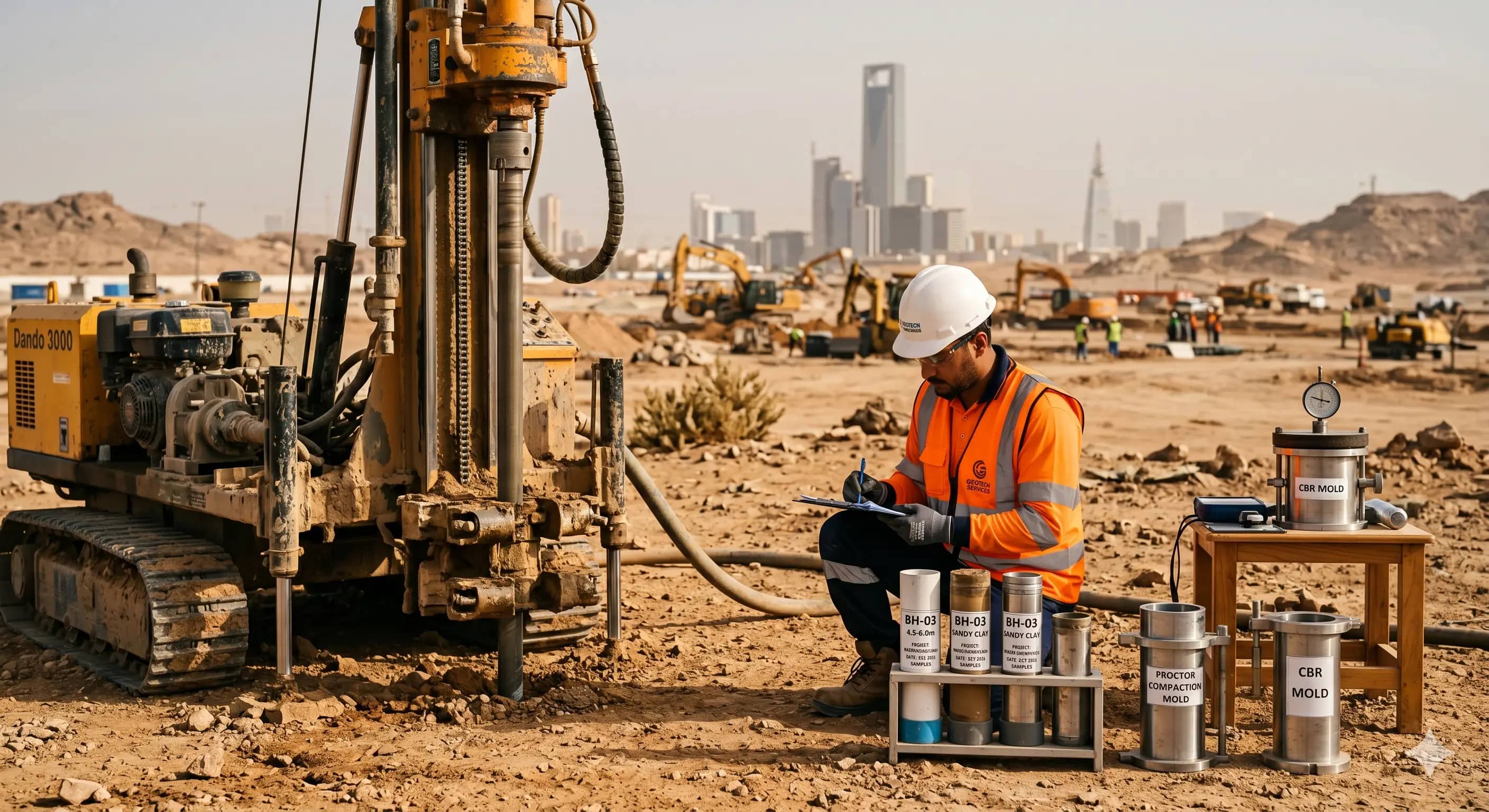
Soil
Soil Testing
Pre-construction soil testing per Saudi Building Code SBC 303 and international ASTM standards — protecting your project's foundations from settlement and cracking risks.
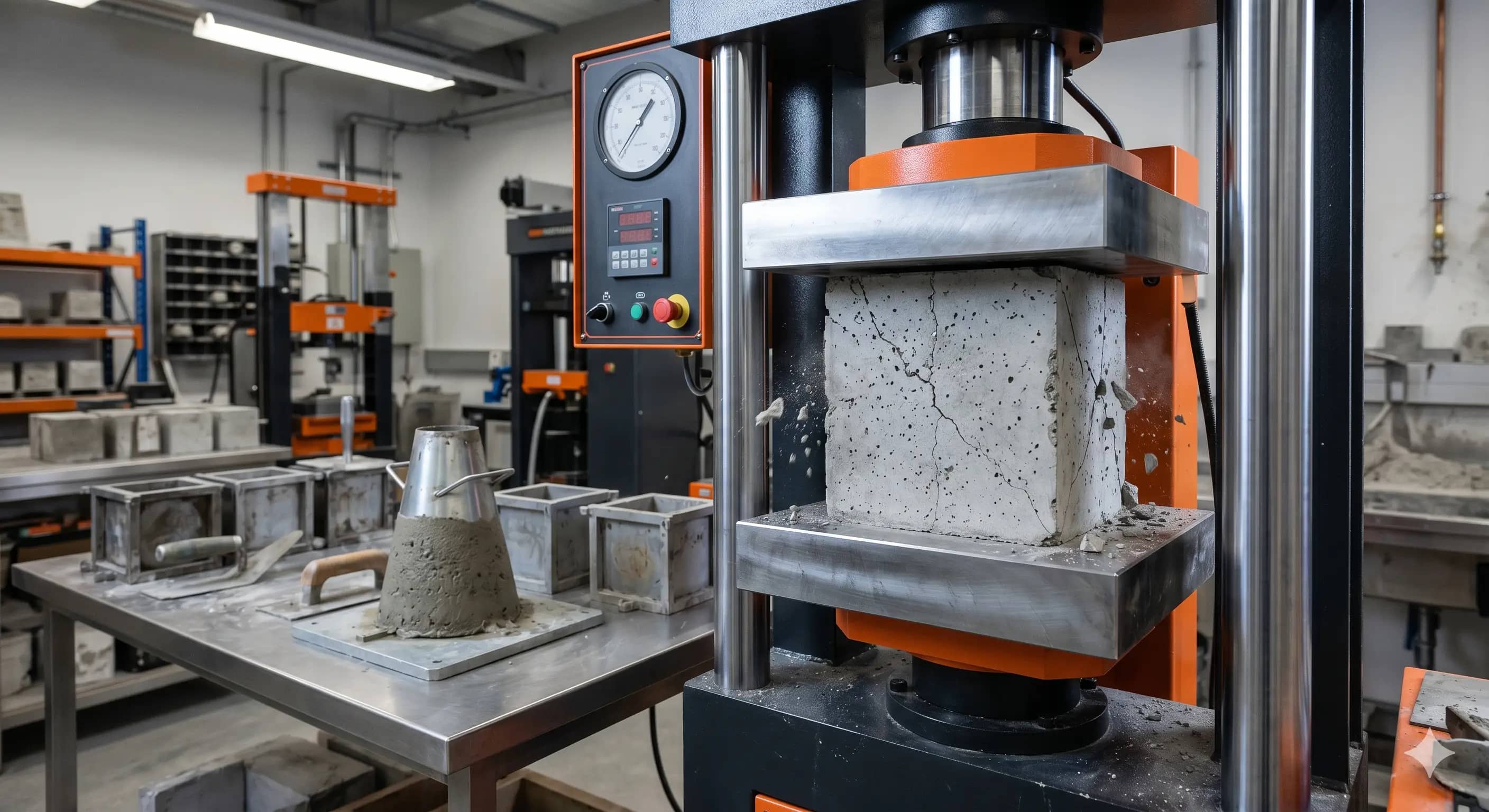
Concrete
Concrete Testing
Certified fresh and hardened concrete testing — pour supervision, compressive strength, core sampling, concrete durability per ASTM and SASO 1452.
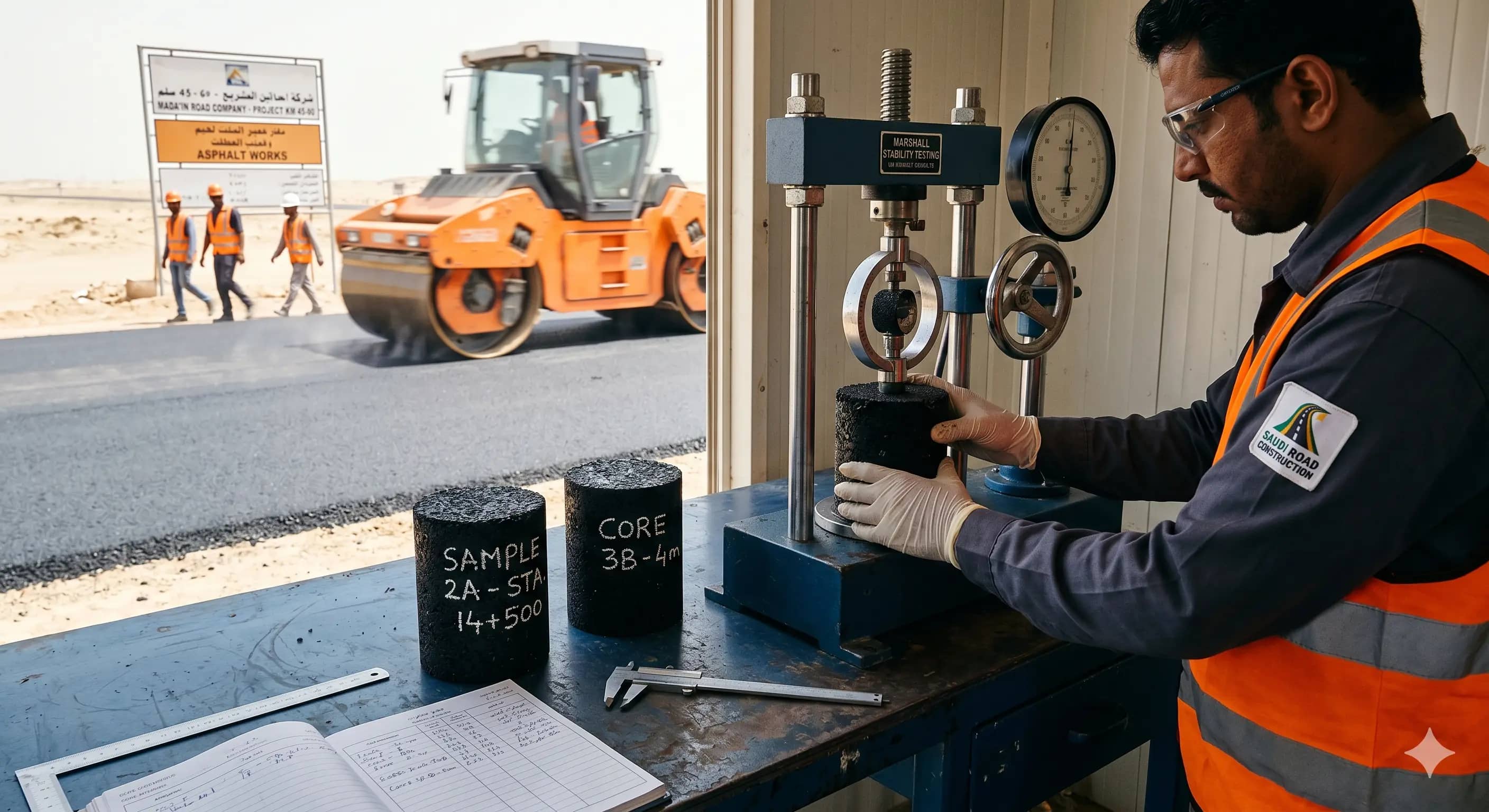
Asphalt
Asphalt Testing
Lab and field asphalt testing — Marshall stability, bitumen content, gradation, asphalt core per ASTM D6926 & D2172 to ensure pavement layer quality.

Rebar
Rebar & Steel Testing
Mechanical and chemical testing for rebar and anchor bolts — tensile, yield, elongation, bend, and chemical analysis per ASTM A615 and SASO 2510 to verify steel compliance.

Chemical
Chemical Analysis
Comprehensive chemical analysis for drinking water, wastewater, groundwater, and irrigation water, plus agricultural soil and aggregate — pH, turbidity, total hardness, calcium, magnesium, sulfates, chlorides, and TDS.
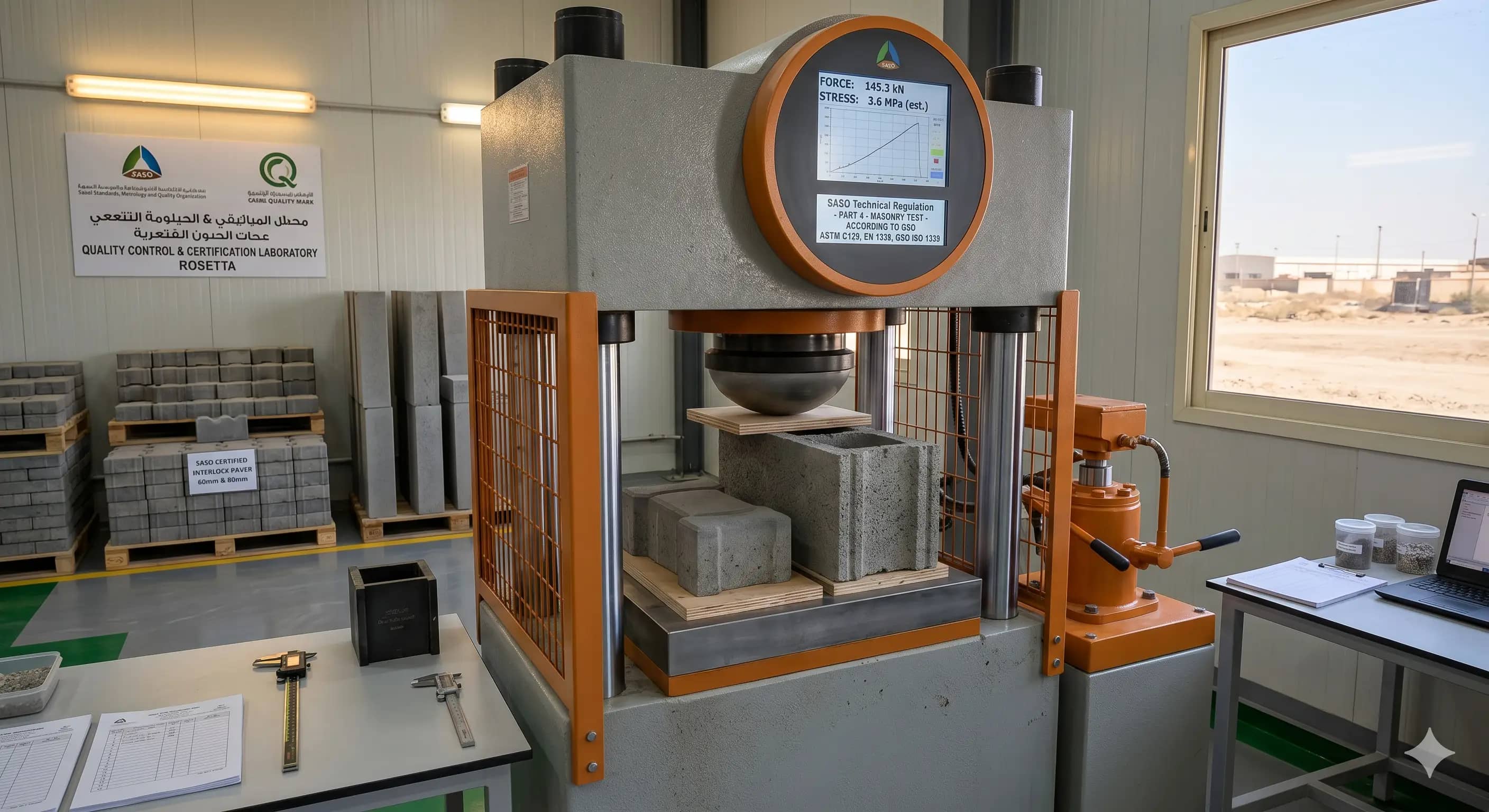
Blocks
Blocks, Interlock & Curbstones Testing
Compressive strength, water absorption, and dimensional testing for concrete blocks, interlock, and curbstones per ASTM C880 and C99 to verify paving material compliance.
Need Aggregate Testing for Your Project?
Our engineering team is ready to receive your samples, with an accurate quotation within 24 hours — aggregate testing available in 5 cities across the Kingdom
Makkah — Jeddah — Madinah — Riyadh — Qassim