
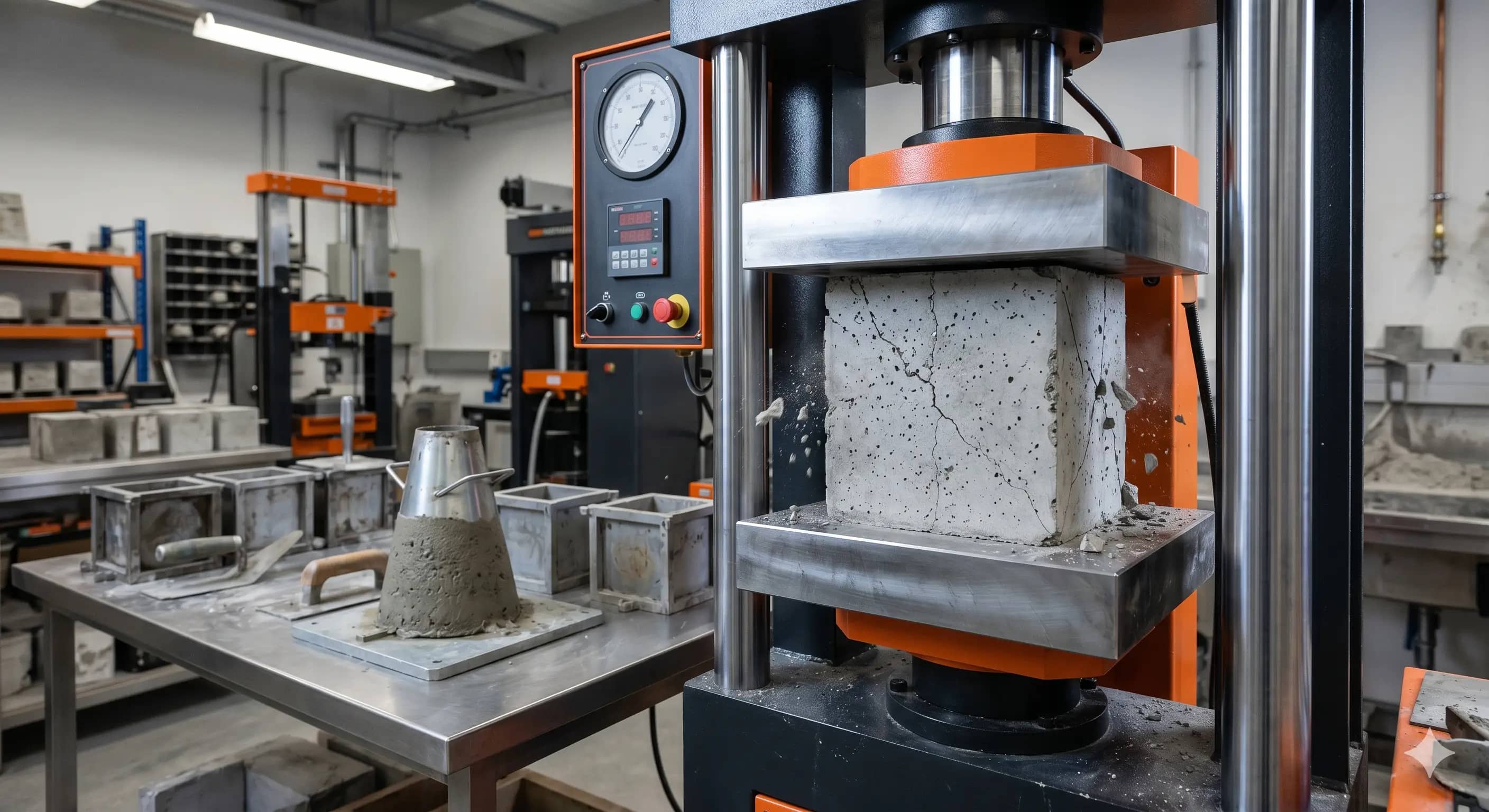
Concrete Testing in Makkah
Certified fresh and hardened concrete testing — pour supervision, compressive strength, core sampling, concrete durability per ASTM and SASO 1452.
Concrete testing is a set of field and laboratory tests on fresh and hardened concrete verifying compressive strength, slump, and durability before, during and after pouring. Performed by an accredited concrete testing lab per ASTM and Saudi Building Code SBC 304, it confirms ready-mix concrete meets required specifications before any pour is accepted on the project.
What Is Concrete Testing and Why Is It Essential on Every Project?
Concrete testing is a series of checks beginning the moment ready-mix concrete arrives on site and continuing up to 28 days after pouring. This includes slump measurement to verify workability, and cube sampling later tested to determine actual compressive strength. Per Saudi Building Code SBC 304, no concrete batch may be accepted without an accredited lab supervising the pour and sampling.
Concrete is the core structural material of any building — any deviation in its strength or composition can threaten the entire structure's safety. Precise on-site concrete testing catches problems before the concrete sets, while core sampling verifies existing structures' quality after construction.
As a concrete testing laboratory accredited to ISO/IEC 17025:2017 (SAAC accreditation No. N-T-00645), Asas Lab provides full field supervision of ready-mix concrete pours in Makkah, Jeddah, Madinah, Riyadh, and Qassim, issuing certified compressive strength reports accepted by consultants and government authorities across the Kingdom.
SBC 304 compliance assurance
Early detection of mix defects
Protecting the building's structural lifespan
Certified reports for government authorities
Full List of Certified Tests
12 certified tests per international standards
Pour supervision + temp/slump + cube sampling (7 & 28 day)
الإشراف على صب الخرسانة + هبوط + عينات مكعبات (7 و28 يوم)
Field pour supervision including slump measurement, temperature, and cube sampling tested at 7 and 28 days — the core test verifying compressive strength compliance per SBC 304.
Unit: sample
Air Content
محتوى الهواء
Measures entrained air content in fresh concrete — an important indicator of freeze-thaw resistance in concrete testing for elevated/mountain regions.
Unit: test
Unit Weight
وزن الوحدة
Determines the unit weight of fresh concrete per cubic meter — used to calculate mix quantities and verify ready-mix concrete consistency.
Unit: test
Initial & Final Setting Time
زمن الشك الابتدائي والنهائي
Measures initial and final concrete setting time — essential for planning sequential pours and curing concrete under Saudi Arabia's high temperatures.
Unit: test
Thermo Couple Test (mass concrete)
درجة حرارة الخرسانة الكتلية
Monitors mass concrete temperature during hydration to prevent thermal cracking in large structural elements such as footings and raft foundations.
Unit: test
Bleeding of Fresh Concrete
نسبة النضح
Measures the amount of mixing water rising to the surface of fresh concrete — excessive bleeding indicates a flawed concrete mix design.
Unit: test
Concrete Core Samples (with report)
كور خرساني (مع تقرير)
Extracting a cylindrical core sample from existing hardened concrete to verify actual compressive strength — used to confirm concrete quality in older buildings or disputed pours.
Unit: sample
Ferro Scan (rebar detection)
الكشف عن حديد التسليح (Ferro Scan)
Locates rebar positions and cover depth inside a concrete element non-destructively — supports structural assessment and verifies execution against design drawings.
Unit: point
Schmidt Rebound Hammer
مطرقة الارتداد شميدت
A non-destructive test estimating surface concrete strength via rebound — a fast screening tool for existing concrete before deciding on core extraction.
Unit: point
Ultrasonic Pulse Velocity (UPVT)
الموجات فوق الصوتية (UPVT)
Measures ultrasonic pulse travel time through concrete to detect internal voids and cracks and assess structural homogeneity.
Unit: test
Half Cell Potential (corrosion)
نسبة الصدأ في حديد التسليح
Assesses the probability of rebar corrosion inside concrete via electrical potential measurement — important for assessing older structures or those near marine environments.
Unit: test
Concrete Durability Package (5 tests)
حزمة ديمومة الخرسانة (5 اختبارات)
A comprehensive durability package (chloride permeability, water absorption, water penetration) determining concrete's long-term resistance to environmental factors.
Unit: sample
Concrete Testing in Makkah — Quality Assurance in the Holy City
Makkah's extreme heat exceeding 45°C, combined with humidity fluctuations from Hajj crowds and valley groundwater, accelerates concrete curing and weakens cement bonds. Concrete testing in Makkah is essential for long-term structural integrity.
Key Concrete Challenges in Makkah
Three main challenges affect Makkah concrete quality: extreme heat accelerating initial set and reducing final compressive strength; sulfate ions in some mixing water sources causing expansion; and local granitic aggregate requiring verification for alkali-silica reaction (ASR).
ASAS Lab Concrete Testing Services in Makkah
We provide slump tests before pouring, cube/cylinder sampling tested at 7 and 28 days, core cutting from existing structures, and permeability/chloride resistance testing per BS EN 12390. Our ISO 17025-accredited lab issues certified reports meeting Saudi Building Code SBC 304 requirements for all Makkah projects.
Adopted Engineering Standards
All concrete tests are performed to adopted Saudi and international standards
ASTM
The American standard for concrete and its components
SBC 304
The Saudi Building Code for structural concrete
SASO
Saudi Standards, Metrology and Quality Organization
ISO 17025
International laboratory accreditation for competence and accuracy
How Does the Concrete Testing Process Work?
From pre-pour coordination to the final compressive strength report
Pre-Pour Coordination
We receive your request and confirm the pour date, required concrete grade and design strength. We send you a quotation within 24 hours and confirm the field technician's attendance with sufficient advance notice.
Field Supervision and Sampling
The field technician attends the site before pouring, measures slump and temperature, then takes representative cube samples for each concrete batch as required by the drawings.
Curing and Laboratory Testing
Samples are cured in calibrated tanks per ISO 17025 and tested at 7 and 28 days using precision hydraulic compression presses to determine actual compressive strength.
Compressive Strength Report Delivery
You receive an engineering-certified report showing each sample's results and compliance with the design compressive strength — ready for submission to the consultant and government authorities.
Why ASAS Lab?
Approved by MODON, ACI, NRRC & KIDANA
Over 500 completed projects across KSA
Makkah, Jeddah, Madinah, Riyadh, Qassim
Precise pour supervision and concrete testing protects your project from costly structural failure later
Engineering-certified reports accepted by all government authorities in the Kingdom
Hydraulic compression presses calibrated periodically per ISO 17025
5 branches in Makkah, Jeddah, Madinah, Riyadh and Qassim
Rapid response to attend pours anywhere across the 5 cities
A specialized engineering team to interpret compressive strength results and support decisions
15+ years and 500+ projects across residential, commercial and industrial construction
What Does the Concrete Test Report Include?
The concrete test report is the document the consultant relies on to accept or reject a pour
Slump value and concrete temperature at time of pour
Compressive strength at 7 and 28 days per cube
Comparison of results against design compressive strength
Pour date, batch number and location on the drawing
Acceptance recommendation or need for additional testing
Signature and certification of the responsible quality engineer
Equipment used for this service
FAQ About Concrete Testing
SBC 304 requires a slump test (ASTM C143) and compressive strength on cubes at 7 and 28 days (ASTM C39 / SASO 1452) per concrete batch. Infrastructure and major projects add durability requirements such as RCPT and water absorption.
Asas Lab Branch in Makkah
Our field team operates from our بطحاء قريش branch, covering all districts of Makkah and nearby areas with calibrated, certified equipment — reports are certified and accepted by government authorities.
Related Articles
Other Services You May Need
Explore the rest of our accredited engineering tests in one place
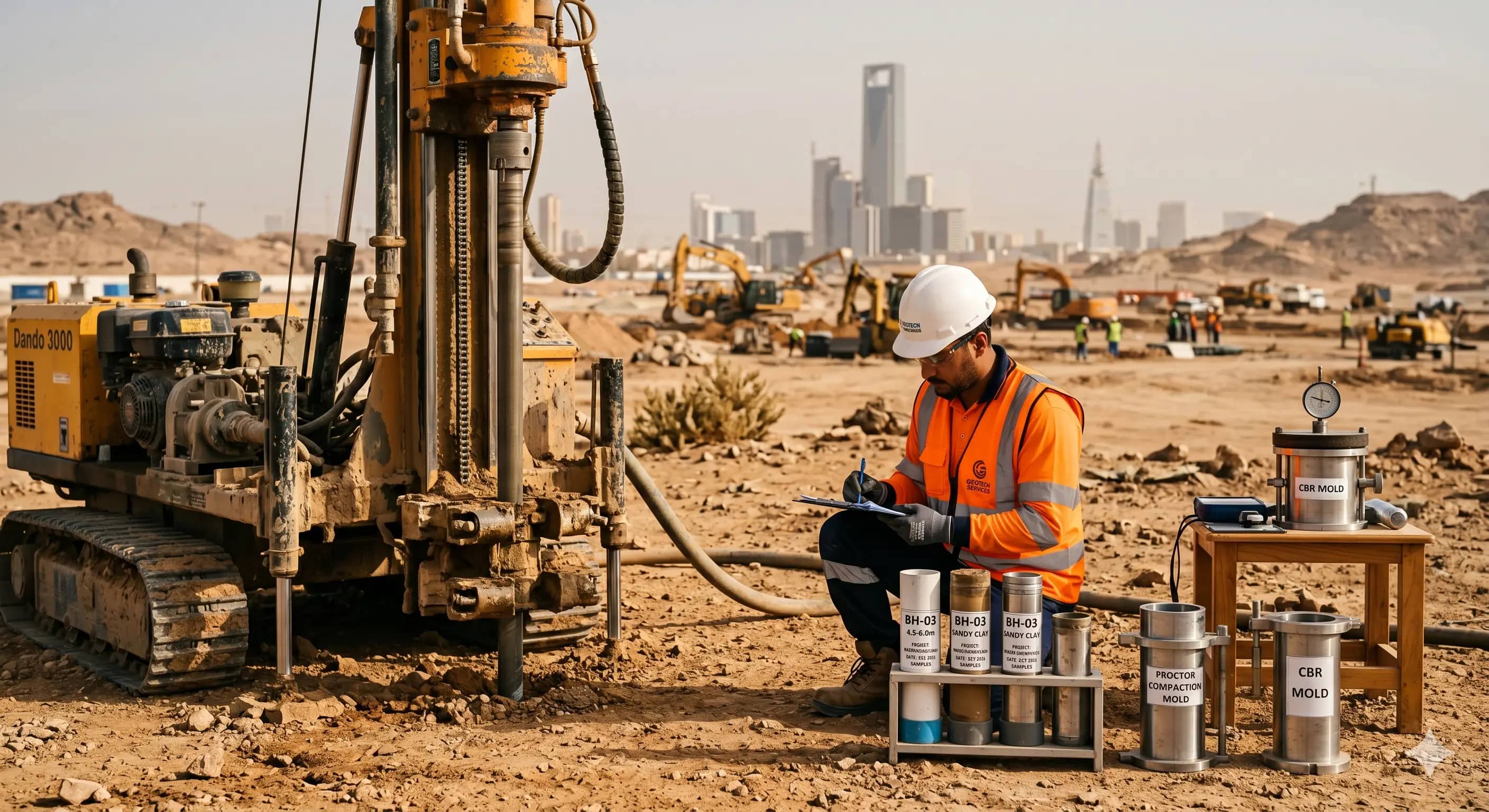
Soil
Soil Testing
Pre-construction soil testing per Saudi Building Code SBC 303 and international ASTM standards — protecting your project's foundations from settlement and cracking risks.
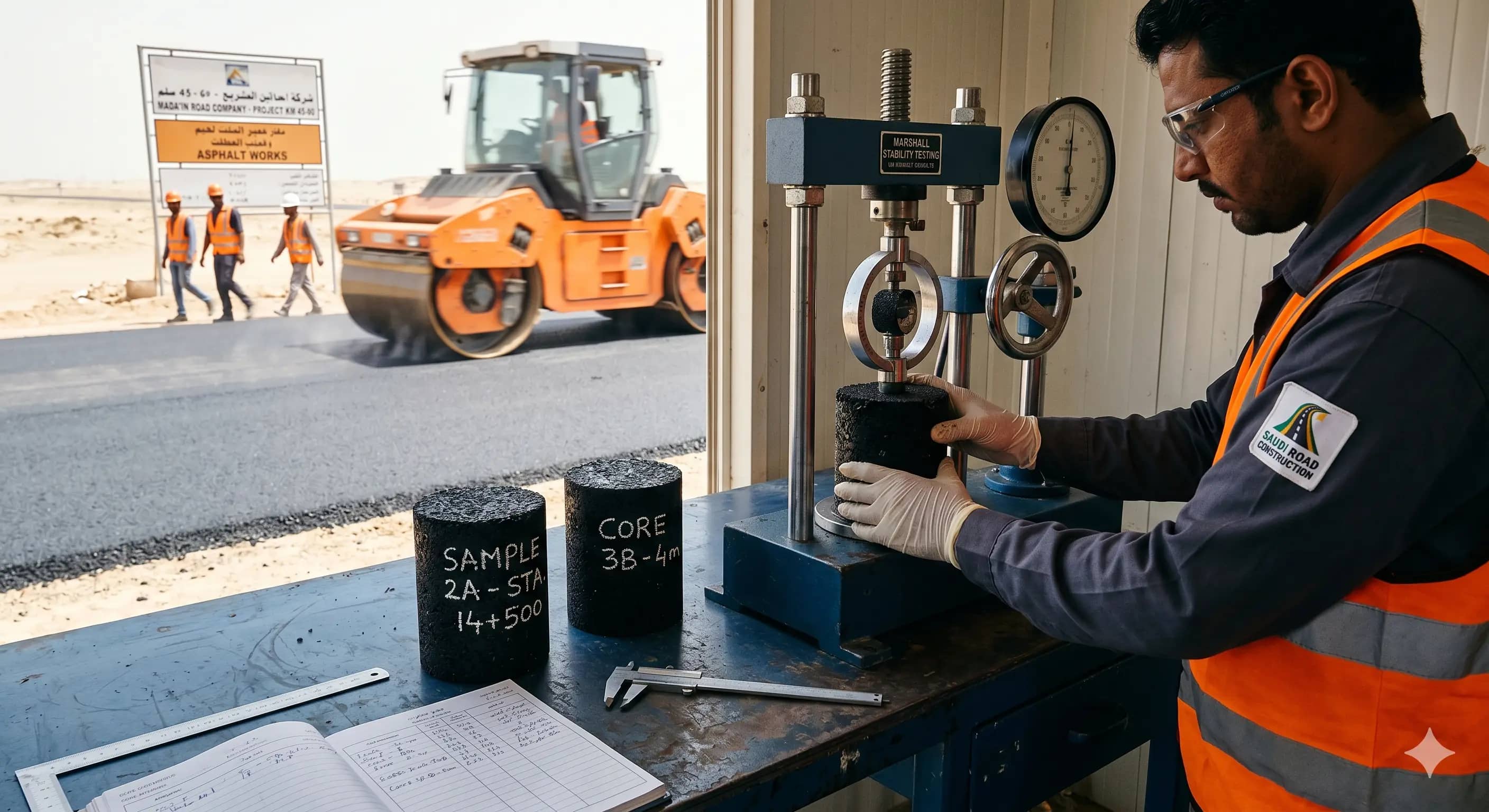
Asphalt
Asphalt Testing
Lab and field asphalt testing — Marshall stability, bitumen content, gradation, asphalt core per ASTM D6926 & D2172 to ensure pavement layer quality.
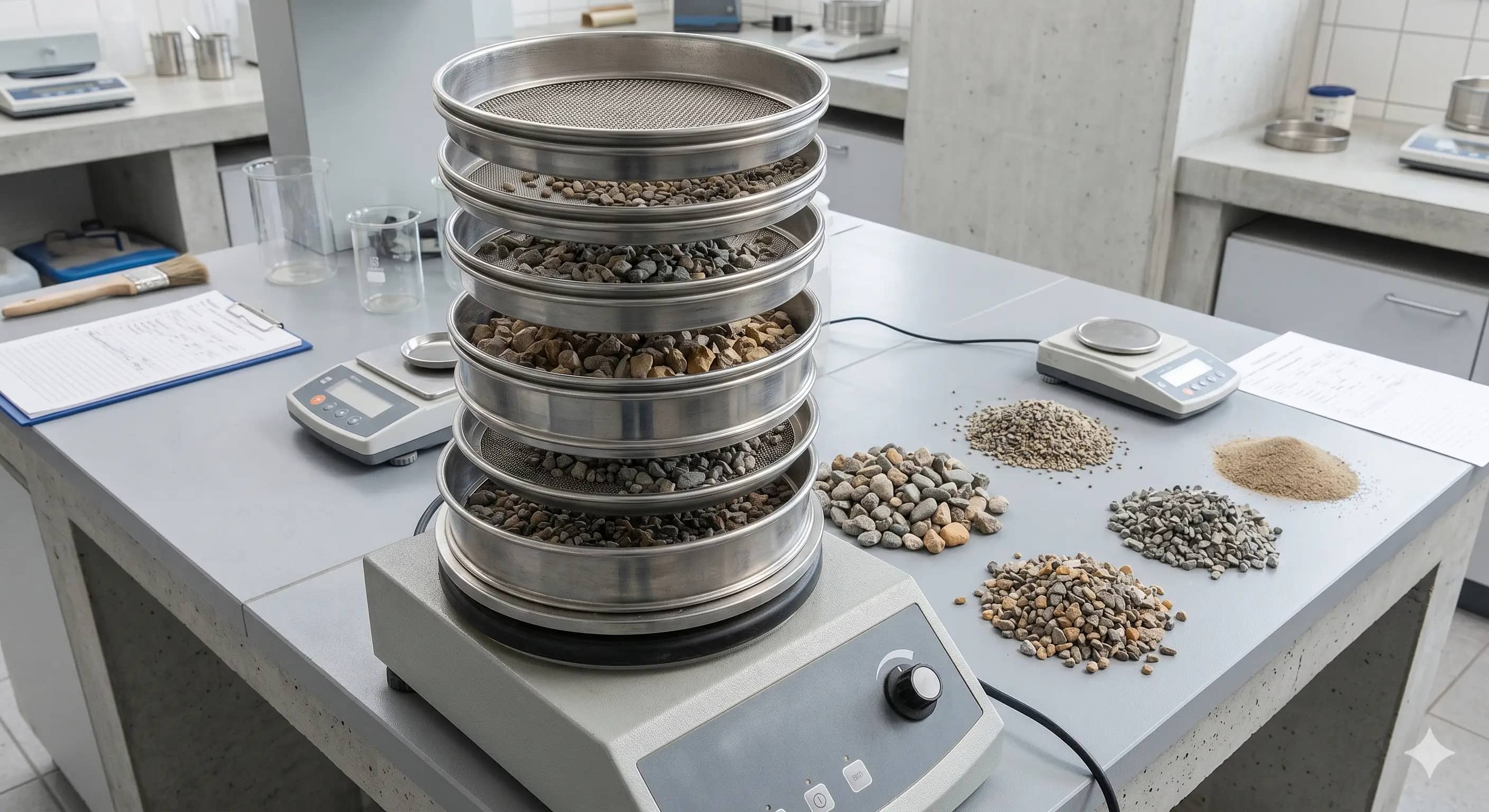
Aggregate
Aggregate Testing
Laboratory aggregate testing including gradation, abrasion resistance, specific gravity, and soundness — per ASTM C131 and C136 to verify aggregate compliance for concrete and asphalt mixes.
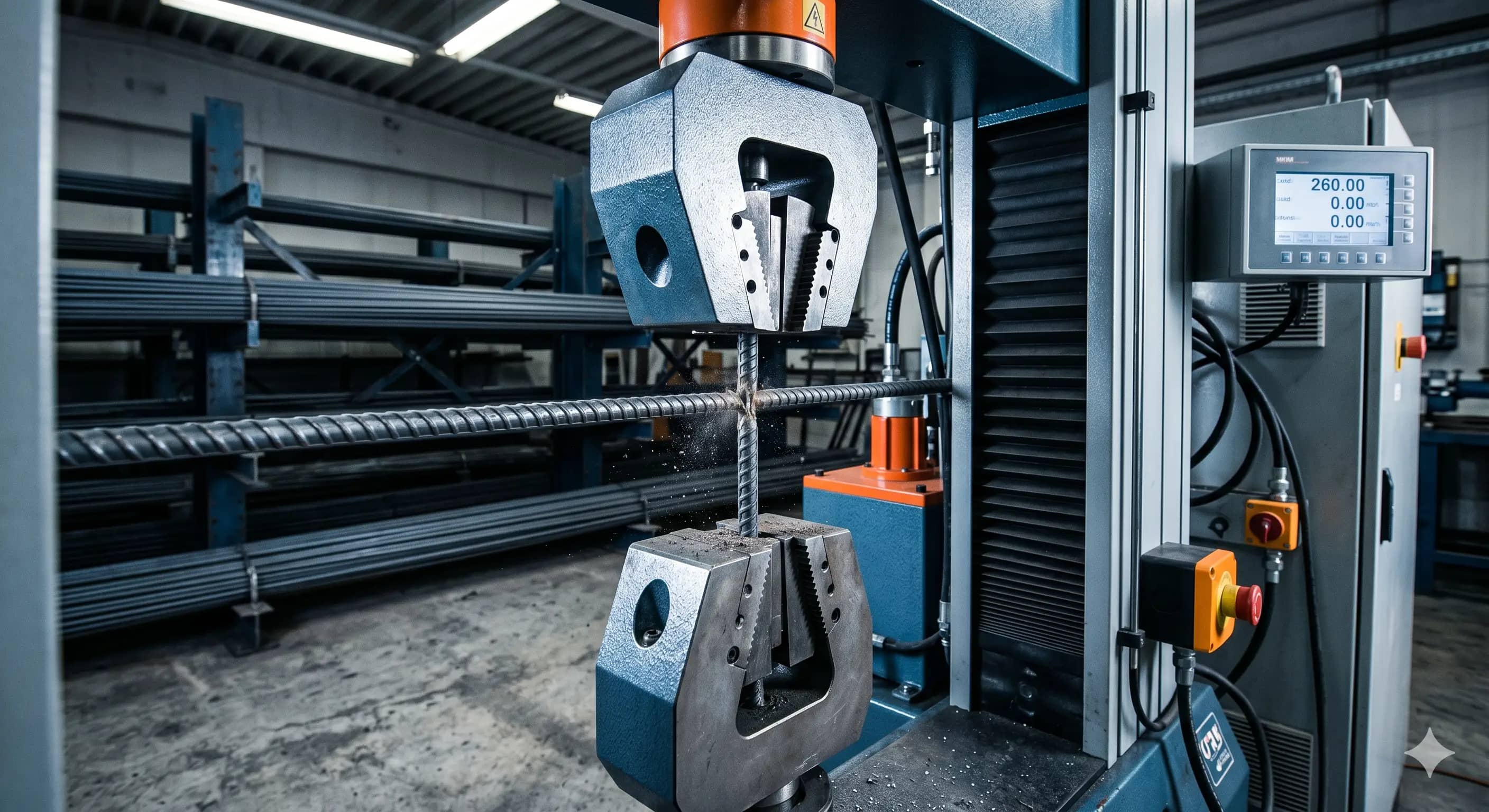
Rebar
Rebar & Steel Testing
Mechanical and chemical testing for rebar and anchor bolts — tensile, yield, elongation, bend, and chemical analysis per ASTM A615 and SASO 2510 to verify steel compliance.

Chemical
Chemical Analysis
Comprehensive chemical analysis for drinking water, wastewater, groundwater, and irrigation water, plus agricultural soil and aggregate — pH, turbidity, total hardness, calcium, magnesium, sulfates, chlorides, and TDS.
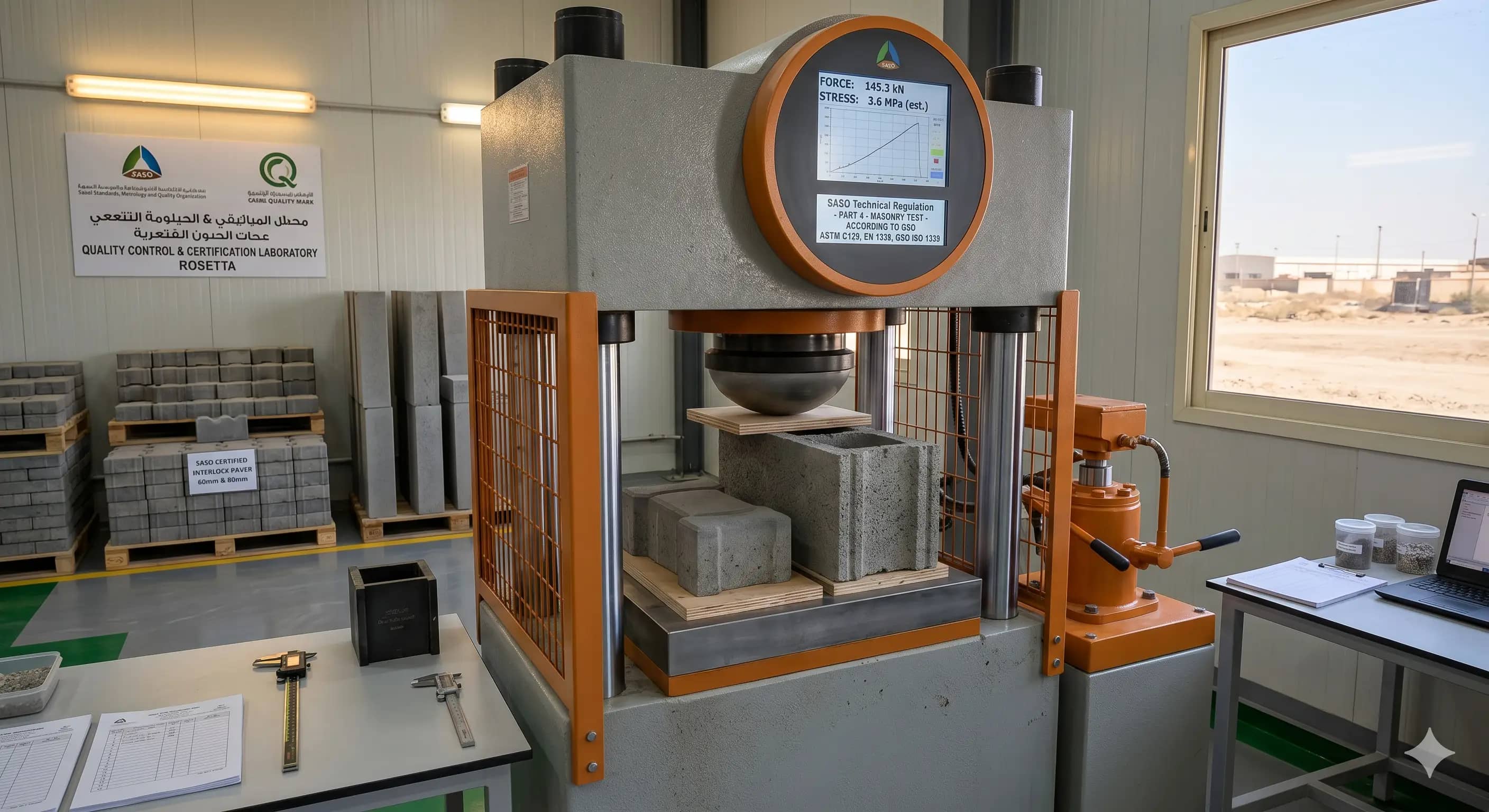
Blocks
Blocks, Interlock & Curbstones Testing
Compressive strength, water absorption, and dimensional testing for concrete blocks, interlock, and curbstones per ASTM C880 and C99 to verify paving material compliance.
Do You Have an Upcoming Concrete Pour?
Our engineering team is ready to attend and supervise your concrete pour, with an accurate quotation within 24 hours — concrete testing available in 5 cities across the Kingdom
Makkah — Jeddah — Madinah — Riyadh — Qassim