
Soil Testing in Qassim
Pre-construction soil testing per Saudi Building Code SBC 303 and international ASTM standards — protecting your project's foundations from settlement and cracking risks.
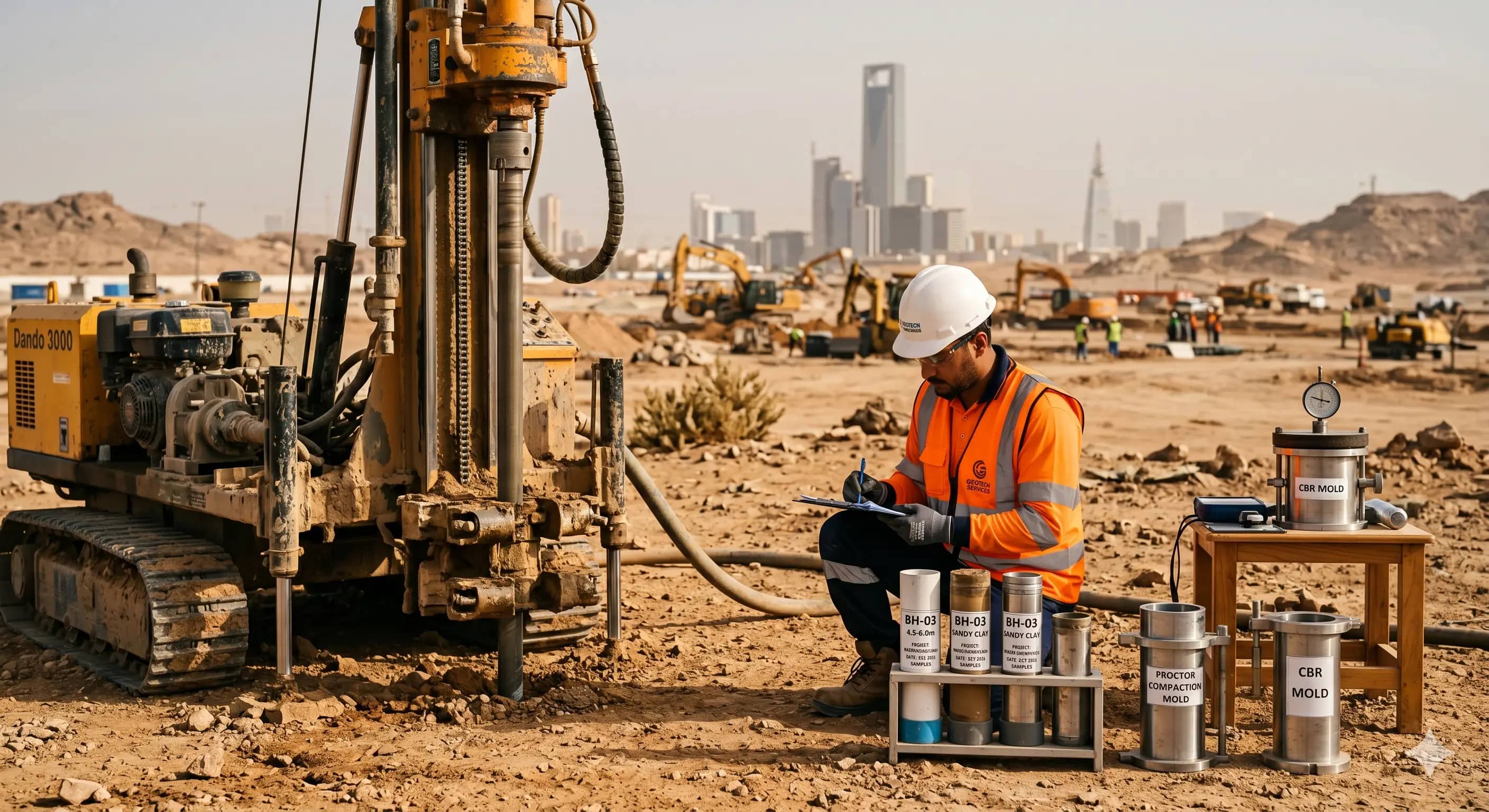
Soil testing is a set of field and laboratory tests that determine the physical and mechanical properties of soil before construction. It is performed by an accredited soil testing lab through exploratory boreholes, sampling and analysis. Under Saudi Building Code SBC 303 it is mandatory for building permits, and it defines the soil bearing capacity and the right foundation type for your project.
What Is Soil Testing and Why Is It Mandatory in Saudi Arabia?
Soil testing is a set of field and laboratory tests that determine the physical and mechanical properties of the soil before any construction project begins. Under the Saudi Building Code SBC 303, pre-construction soil testing is a mandatory requirement for all construction projects in the Kingdom of Saudi Arabia, and building permits cannot be obtained without a certified report from an accredited laboratory.
The soil is the element that carries the entire building — any error in evaluating it can lead to foundation settlement, wall cracking, or structural failure. The cost of soil testing is an investment that protects your project from losses hundreds of times greater.
As a soil testing laboratory accredited to ISO/IEC 17025:2017 (SAAC accreditation No. N-T-00645), Asas Lab performs exploratory boreholes to the depths required by the code, collects samples from the different soil strata, then analyzes them in the laboratory to issue a certified geotechnical report accepted by all governmental and engineering authorities in the Kingdom.
Structural and foundation safety
Mandatory SBC 303 requirement
Savings on repair costs
Avoiding project delays
Full List of Certified Tests
16 certified tests per international standards
Standard soil sampling from site
أخذ عينة من الردميات بالطريقة القياسية
The first step in soil testing — collecting representative samples from backfill or exploratory boreholes using the standard method to ensure accurate laboratory soil test results.
Unit: sample
Sieve Analysis
التدرج الحبيبي
Determines the grain-size distribution of the soil to classify its type and define its engineering properties. Essential for selecting suitable backfill materials and designing structural layers.
Unit: sample
Fines passing #200 sieve (0.075 μm)
المواد الناعمة المارة من منخل #200
Measures the percentage of fines passing the #200 sieve to evaluate backfill and earth-layer quality — a key indicator in soil classification per the adopted standards.
Unit: sample
Atterberg Limits (LL & PL)
حدود أتربرج (السيولة واللدونة)
Measures the behavior of clayey soil as moisture content changes — defining shrink-swell potential and supporting foundation design decisions in areas with clay soils.
Unit: sample
Modified Proctor
البروكتور المعدل
Determines the soil's maximum dry density and optimum moisture content for compaction — used as the reference for backfill works and for comparing field density test results.
Unit: sample
California Bearing Ratio — CBR (3 molds)
نسبة التحمل كاليفورنيا (3 قوالب)
Measures the soil's bearing capacity under loads — used primarily in the design of road layers, pavements, warehouse floors and parking areas.
Unit: sample
Field Density — Sand Cone (min 5 pts/visit)
الكثافة الحقلية بالمخروط الرملي (5 نقاط/زيارة)
Verifies in-situ compaction ratio using the sand cone method — an essential test for accepting backfill layers in residential and road projects per the Saudi Building Code.
Unit: point
Field Density — Nuclear Method (5 pts/visit)
الكثافة الحقلية بالطريقة النووية (5 نقاط/زيارة)
Measures soil density after backfilling to verify the required compaction ratio — using NRRC-licensed nuclear gauges. Required in road projects, floor slabs and backfill beneath foundations.
Unit: point
Thermal Conductivity
التوصيلية الحرارية للتربة
Measures the soil's ability to conduct heat — a specialized test required by high-voltage cable and power station projects to design underground installation depths.
Unit: test
Thermal Resistivity
المقاومة الحرارية للتربة
Determines the soil's resistance to heat transfer around underground cables — complementing the thermal conductivity test in electrical infrastructure projects.
Unit: test
Los Angeles Abrasion
مقاومة التآكل — لوس أنجلوس
Measures the abrasion resistance of aggregate and earth materials — a core quality criterion for road base and subbase materials per ASTM C131.
Unit: sample
Hydrometer Analysis
الهيدرومتر للمواد الطينية
Analyzes the distribution of fine particles in clay and silt soils that sieves cannot capture — essential for precise geotechnical studies and fine-soil classification.
Unit: sample
Moisture Content %
محتوى الماء
Measures the moisture ratio in the soil — a fundamental indicator affecting bearing capacity and soil behavior under loading and during backfill works.
Unit: sample
Relative Density (sandy soil)
الكثافة النسبية للتربة الرملية
Determines the compaction state of sandy soil between its maximum and minimum densities — supporting liquefaction assessment and foundation design on sandy soils.
Unit: test
Plate Load Test (P.L.T)
قرص التحميل
A field test measuring soil bearing capacity and settlement under an actual load — one of the most accurate soil tests for designing shallow foundations and raft slabs.
Unit: test
Slab Load Test
تحميل السقف
A field load test on existing concrete slabs to verify their structural integrity and load capacity — required for extensions or when settlement or cracking appears.
Unit: test
Soil Testing in Qassim — Loose Sands and Converted Agricultural Land
Qassim's soil is predominantly aeolian and alluvial sand with low dry density and notable collapsibility when wetted, particularly in silty inter-layers beneath Buraidah and Unayzah. Rapid conversion of date palm farms and traditional agricultural land to residential and industrial use brings unique challenges: former irrigation-saturated sandy soils with periodic wetting history. ASAS Lab performs double oedometer collapse testing, maximum/minimum density per ASTM D4253/D4254 for relative density, direct shear for friction angle, and deep SPT to locate firm bearing strata. Industrial zone foundation load tests also available for Buraidah's expanding manufacturing sector.
Adopted Engineering Standards
All our tests are performed to the international and local standards adopted by Saudi government authorities
ASTM
The American standard for materials and soil testing
SBC 303
The Saudi Building Code for soils and foundations
BS 1377
The British standard for soil testing
ISO 17025
The international laboratory accreditation for competence and accuracy
How Does the Soil Testing Process Work?
From the moment you contact us until you receive the certified report — here are the steps in detail
Contact and Requirements Definition
We receive your request and define the required tests based on your project type, location and SBC 303 requirements. We send you an accurate quotation within 24 hours.
Site Visit and Sampling
Our engineering team visits the site with modern equipment — performing the field tests, executing the boreholes and collecting soil samples from the required depths per the adopted standards.
Laboratory Analysis
Samples are analyzed in our accredited laboratories using equipment calibrated periodically per ISO 17025, and results are recorded with high accuracy per the adopted standards.
Certified Report Delivery
You receive the complete, engineering-certified soil test report including results, recommendations and the suitable foundation type — ready for submission to government authorities and the design engineer.
Why ASAS Lab?
Approved by MODON, ACI, NRRC & KIDANA
Over 500 completed projects across KSA
Makkah, Jeddah, Madinah, Riyadh, Qassim
Choosing an accredited soil testing laboratory directly affects the accuracy of results and the acceptance of the report by engineering and government authorities in Saudi Arabia
Engineering-certified reports accepted by all government authorities in the Kingdom
Modern equipment calibrated periodically per ISO 17025
5 branches in Makkah, Jeddah, Madinah, Riyadh and Qassim
Fast execution and report delivery in the shortest possible time
A specialized engineering team supporting you in interpreting results and making decisions
15+ years of experience in residential, commercial, industrial and government projects
What Does the Soil Test Report Include?
The soil test report is the primary reference for the design engineer and the contractor — it includes everything you need to make the right design decisions
Detailed description of soil strata
Test results in figures and charts
Soil bearing capacity (kN/m²)
Groundwater table level
Recommendations for the suitable foundation type
The appropriate foundation depth
Equipment used for this service
FAQ About Soil Testing
Per SBC 303, a geotechnical investigation must include: exploratory borings, Standard Penetration Test SPT (ASTM D1586), grain size analysis (ASTM D422), and Atterberg limits (ASTM D4318). High-rise buildings and critical facilities require additional tests such as CBR and Plate Load.
Asas Lab Branch in Qassim
Our field team operates from our بريدة branch, covering all districts of Qassim and nearby areas with calibrated, certified equipment — reports are certified and accepted by government authorities.
Related Articles
Other Services You May Need
Explore the rest of our accredited engineering tests in one place
Concrete
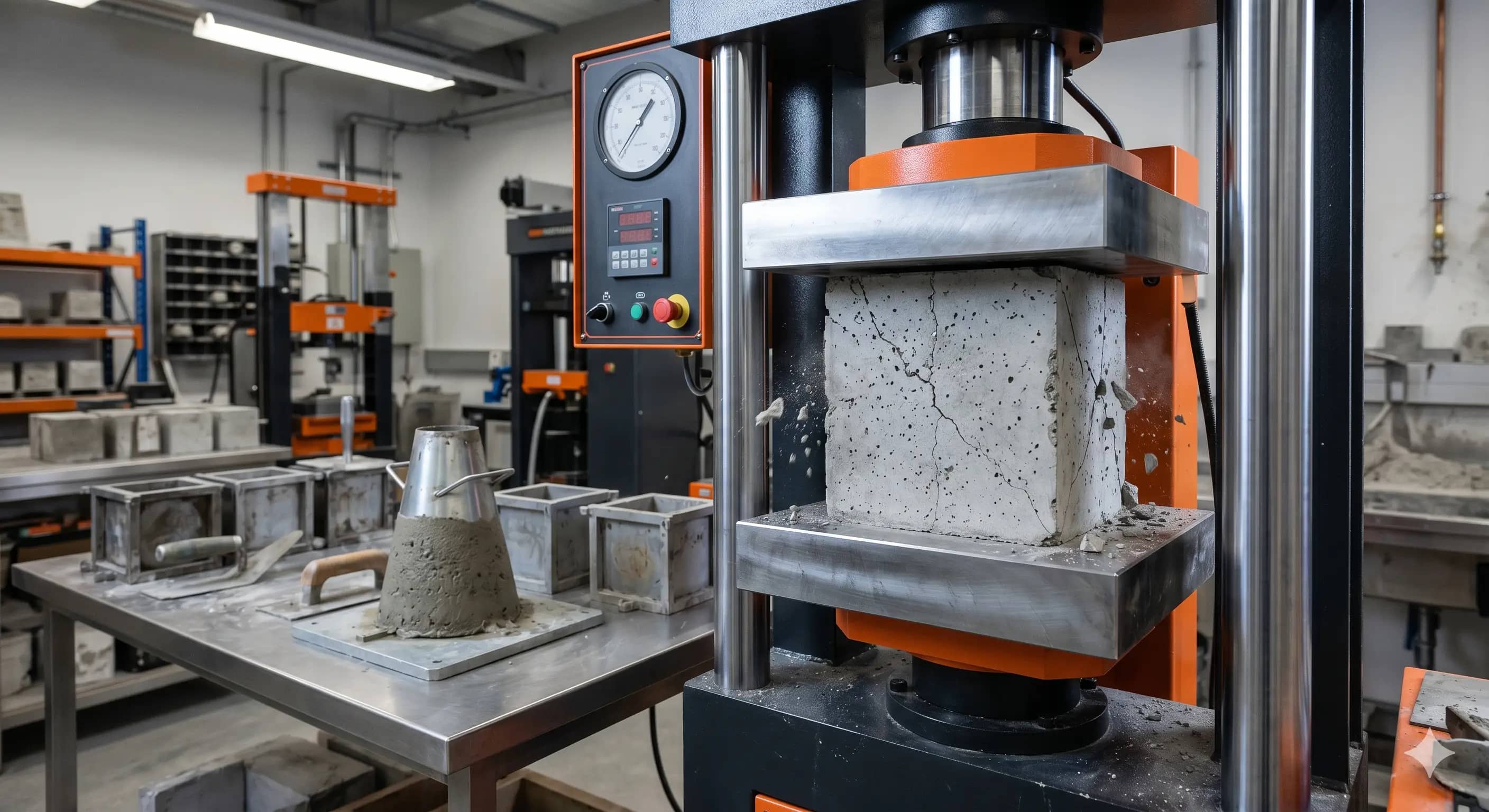
Concrete Testing
Certified fresh and hardened concrete testing — pour supervision, compressive strength, core sampling, concrete durability per ASTM and SASO 1452.
Asphalt
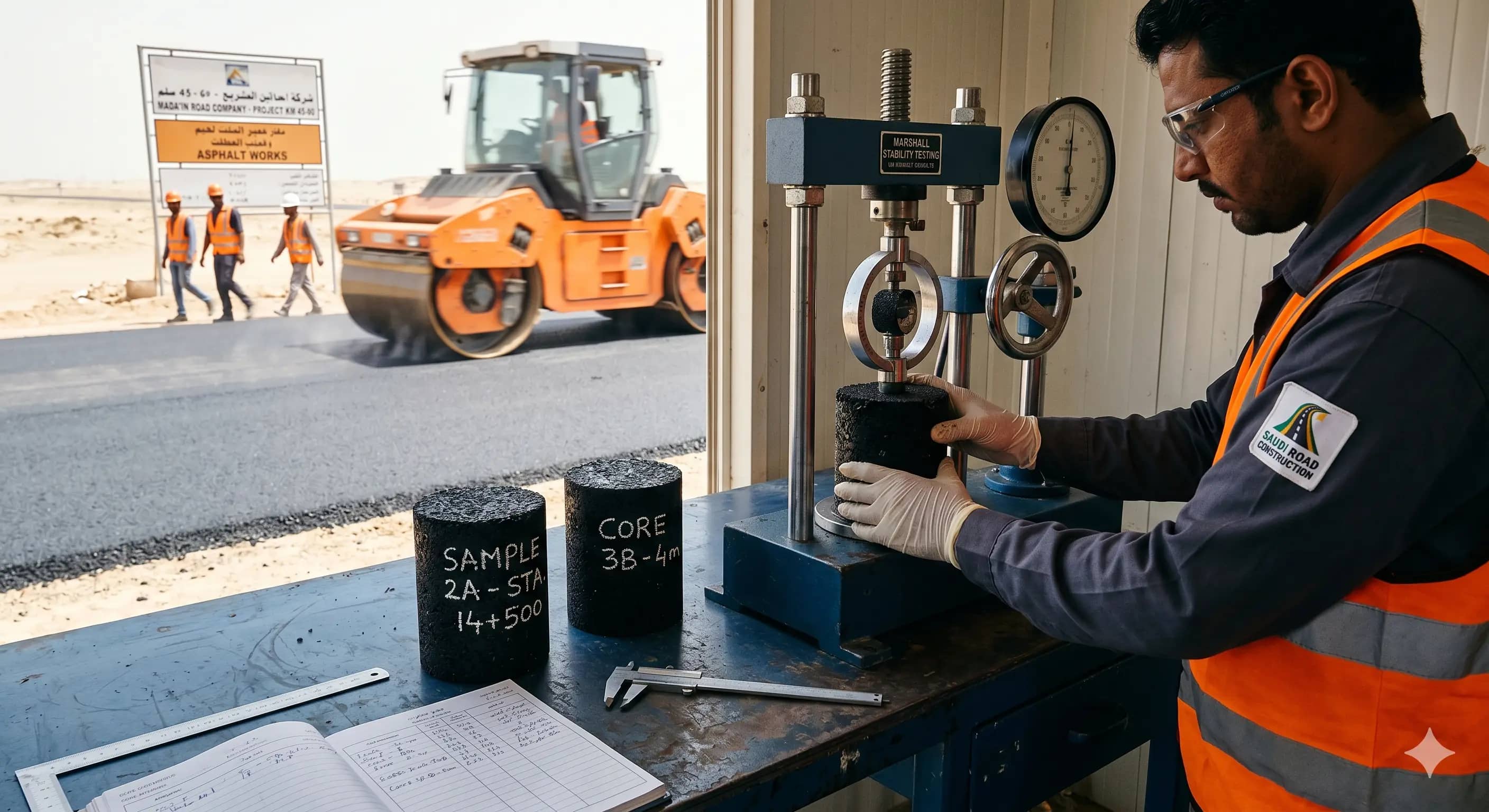
Asphalt Testing
Lab and field asphalt testing — Marshall stability, bitumen content, gradation, asphalt core per ASTM D6926 & D2172 to ensure pavement layer quality.
Aggregate
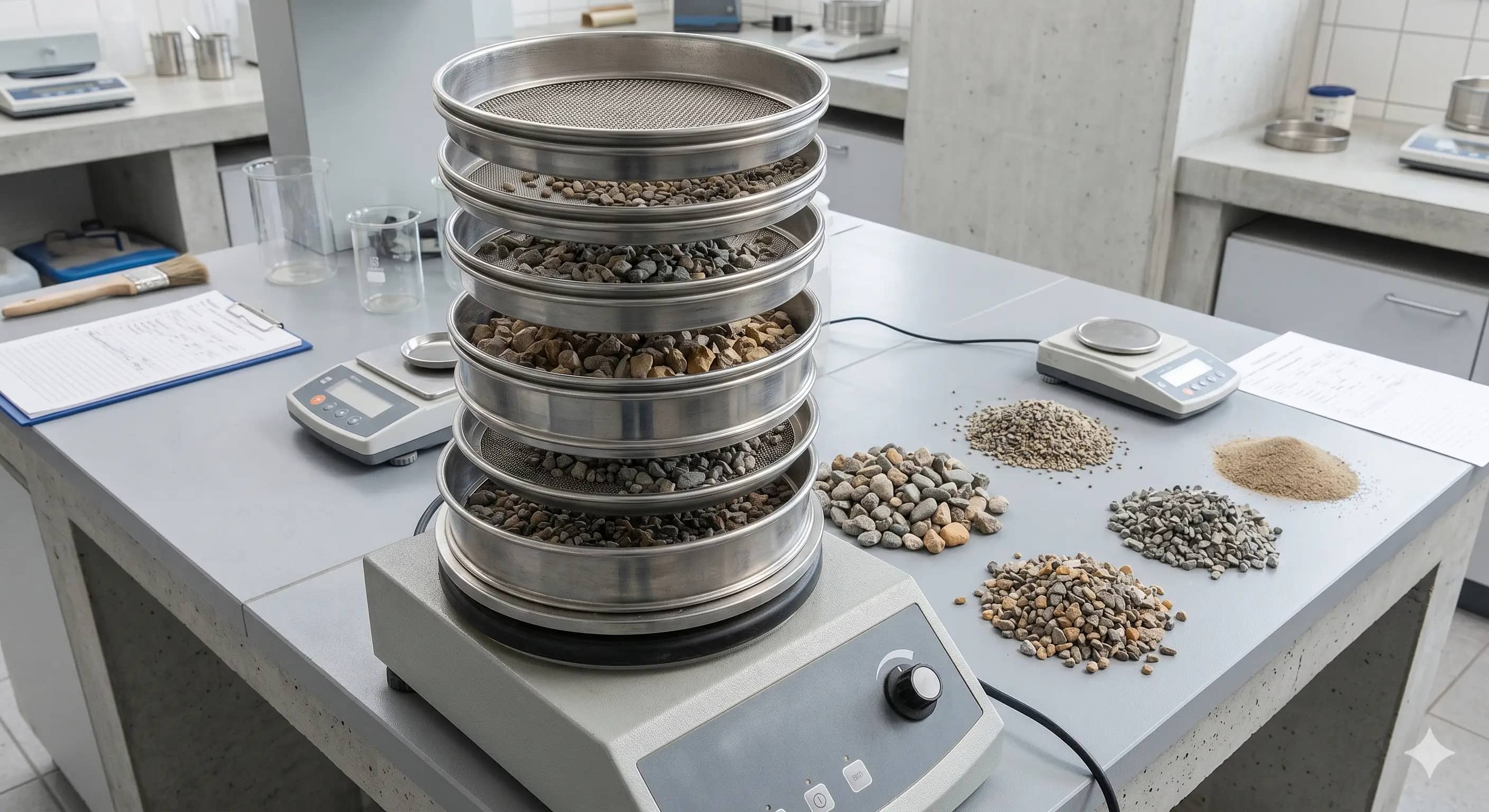
Aggregate Testing
Laboratory aggregate testing including gradation, abrasion resistance, specific gravity, and soundness — per ASTM C131 and C136 to verify aggregate compliance for concrete and asphalt mixes.
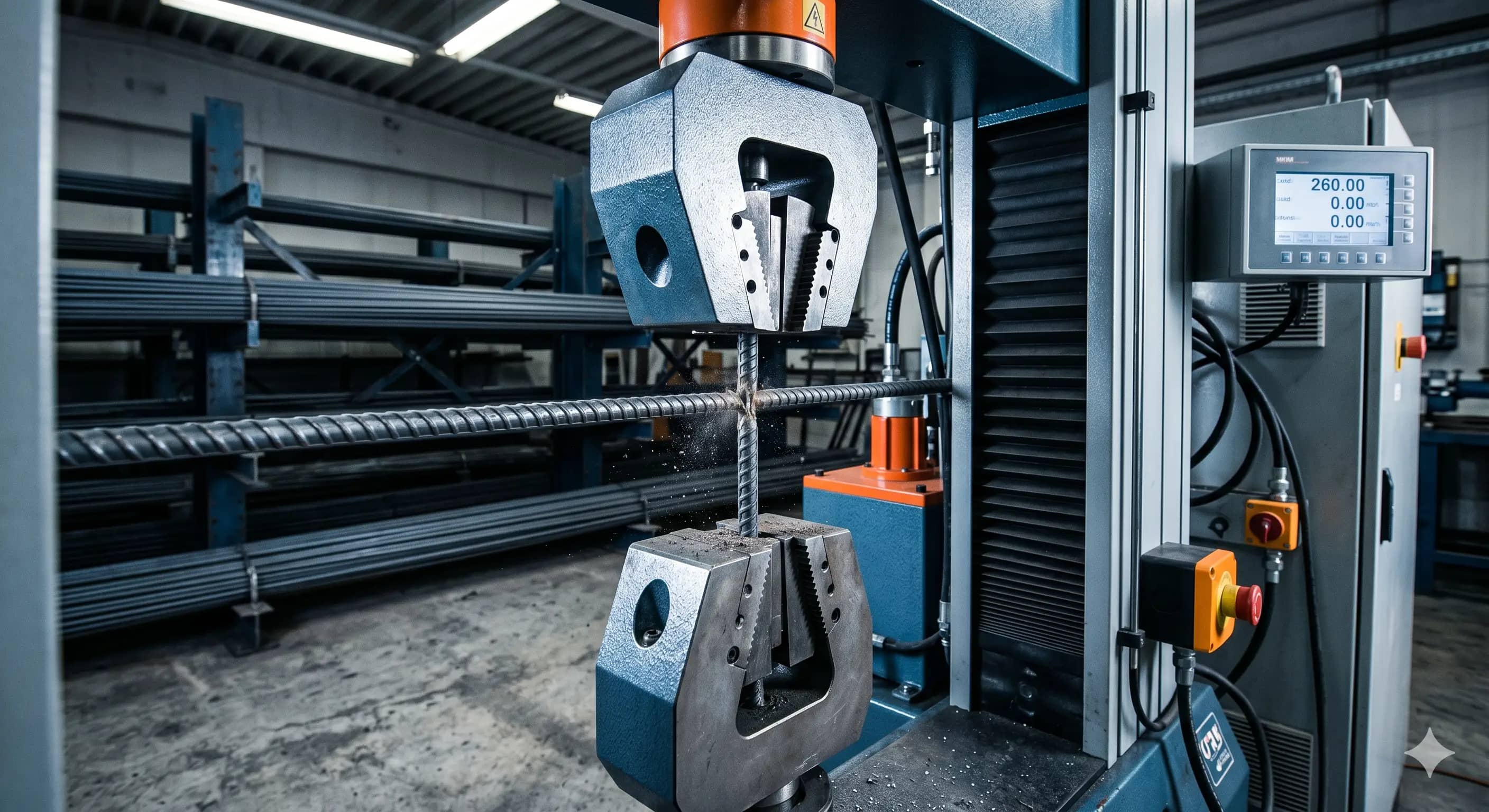
Rebar
Rebar & Steel Testing
Mechanical and chemical testing for rebar and anchor bolts — tensile, yield, elongation, bend, and chemical analysis per ASTM A615 and SASO 2510 to verify steel compliance.

Chemical
Chemical Analysis
Comprehensive chemical analysis for drinking water, wastewater, groundwater, and irrigation water, plus agricultural soil and aggregate — pH, turbidity, total hardness, calcium, magnesium, sulfates, chlorides, and TDS.
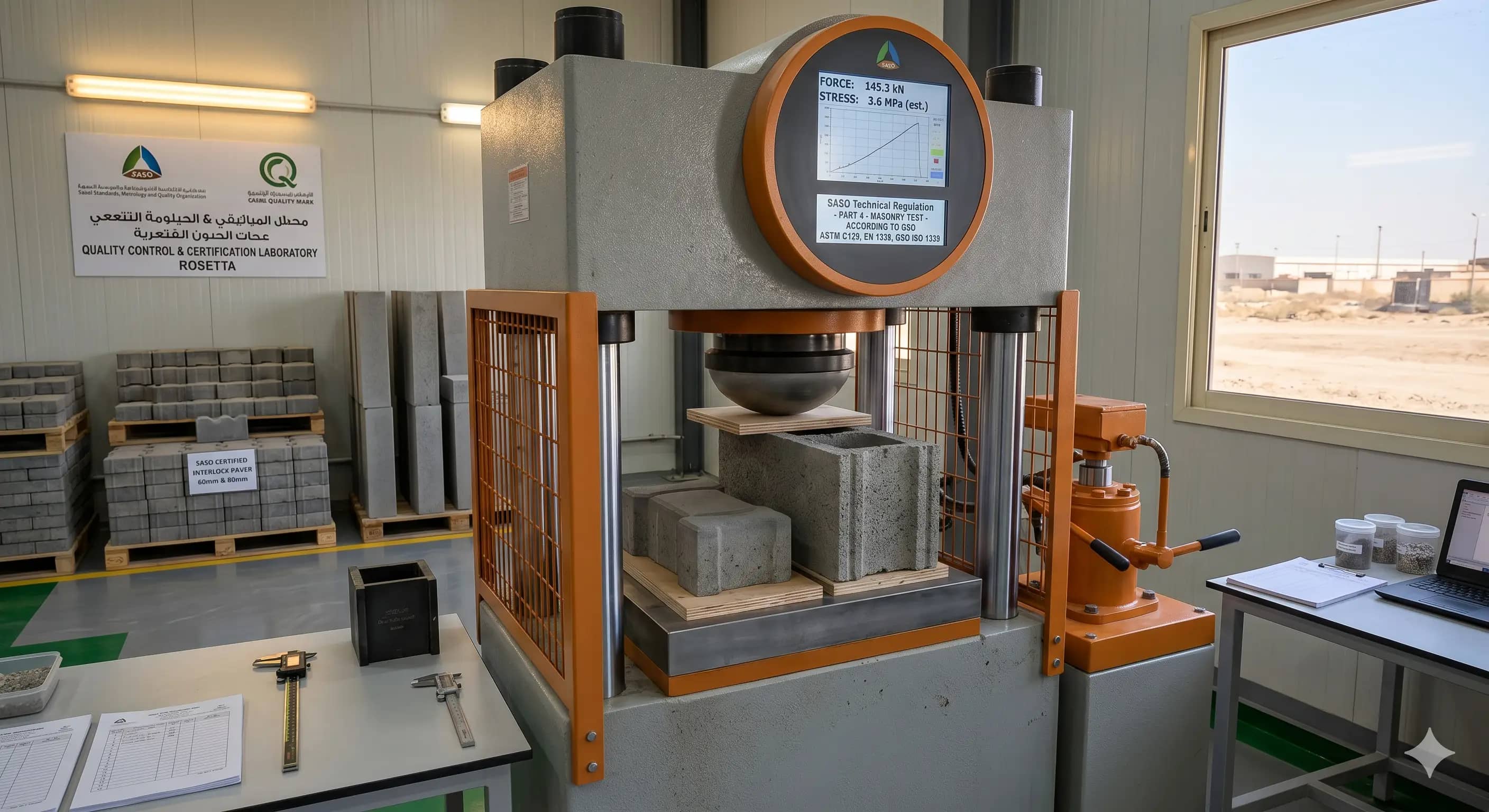
Blocks
Blocks, Interlock & Curbstones Testing
Compressive strength, water absorption, and dimensional testing for concrete blocks, interlock, and curbstones per ASTM C880 and C99 to verify paving material compliance.
Need Soil Testing for Your Project?
Our engineering team is ready to help you define the required tests and provide an accurate quotation within 24 hours — soil testing service is available in 5 cities across the Kingdom
Makkah — Jeddah — Madinah — Riyadh — Qassim